How to build the infinity-corrected microscope
Task-oriented. You've done the telescope tutorial and want the microscope that works like the ones in modern research labs.
Turn the Kepler telescope around and you have a microscope: this build uses the 50 mm lens as objective, the 100 mm lens as tube lens, and a rotated 50 mm lens (or the Ramsden eyepiece) to look in from above via a 45° mirror.
Magnification: objective eyepiece
What you need
- Sample holder cube + prepared sample
- 1× 50 mm lens cube (objective)
- 1× 100 mm lens cube (tube lens)
- 1× 50 mm lens cube, insert rotated 90° (eyepiece, looking up) — see Open and reconfigure a cube
- 1× 45° mirror cube, mirror facing up
- 2× empty cubes
- 10× puzzle base plates
- Torch
Steps
- Click 5 base plates in a row.
- Front of the row: sample holder cube, sample centred.
- Behind it: the 50 mm objective cube, then the 100 mm tube lens cube.
- Then one empty cube, and on the last plate the 45° mirror cube with the mirror surface pointing up.
- Stabilise with 5 plates on top.
- On top of the mirror cube: the rotated 50 mm eyepiece cube.
- Torch behind the sample holder, pointing at the sample.
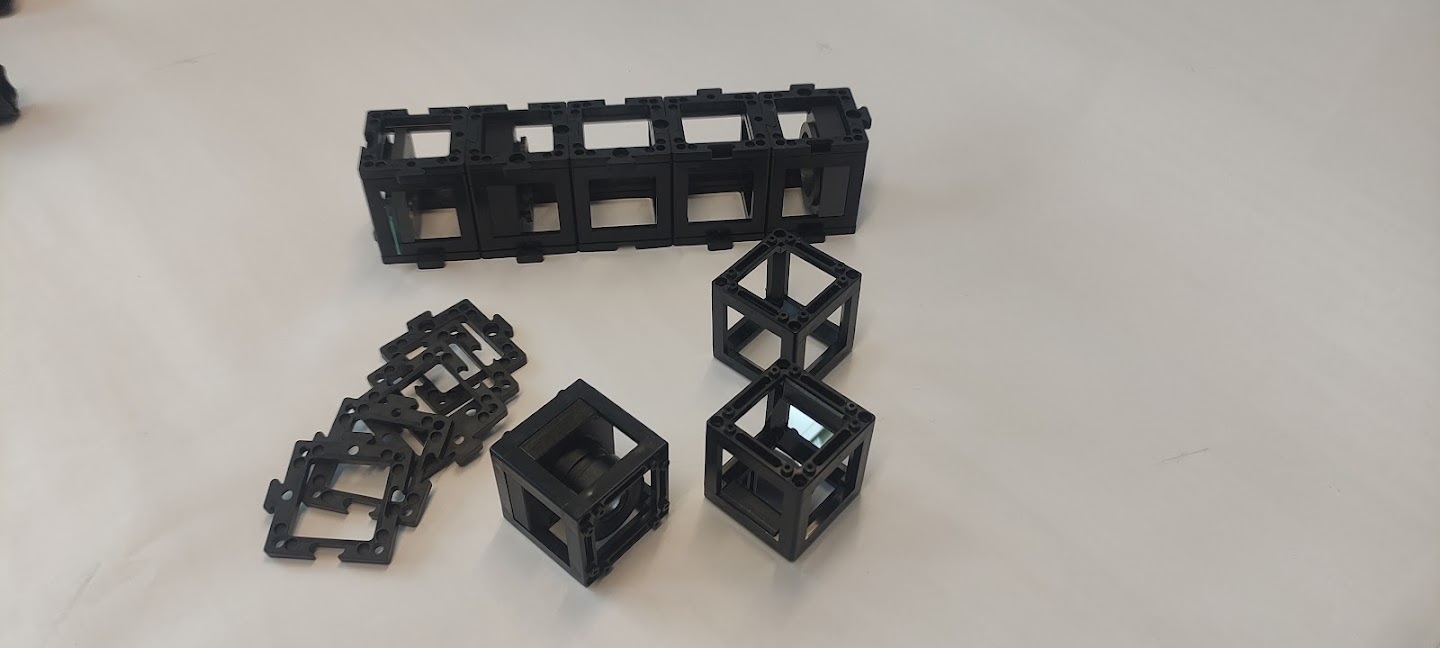 Sample holder joins the (former) Kepler telescope.
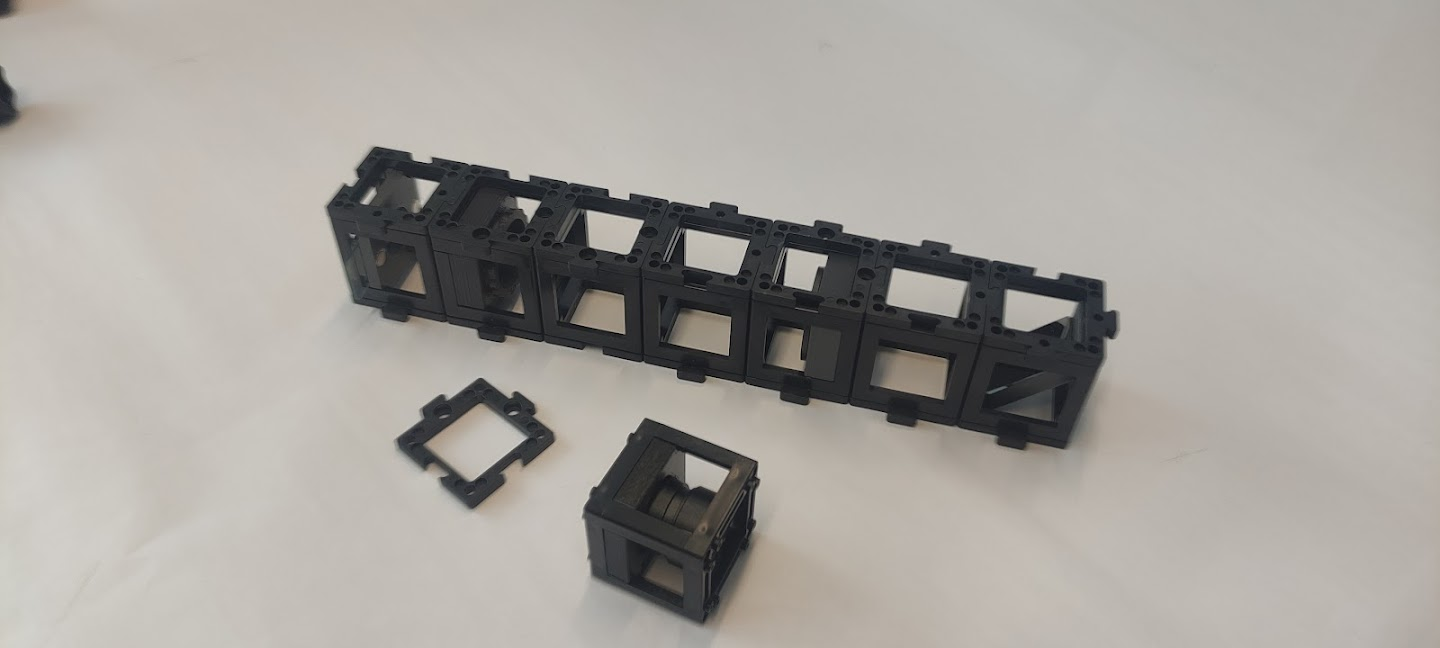 Empty cube and mirror cube extend the row.
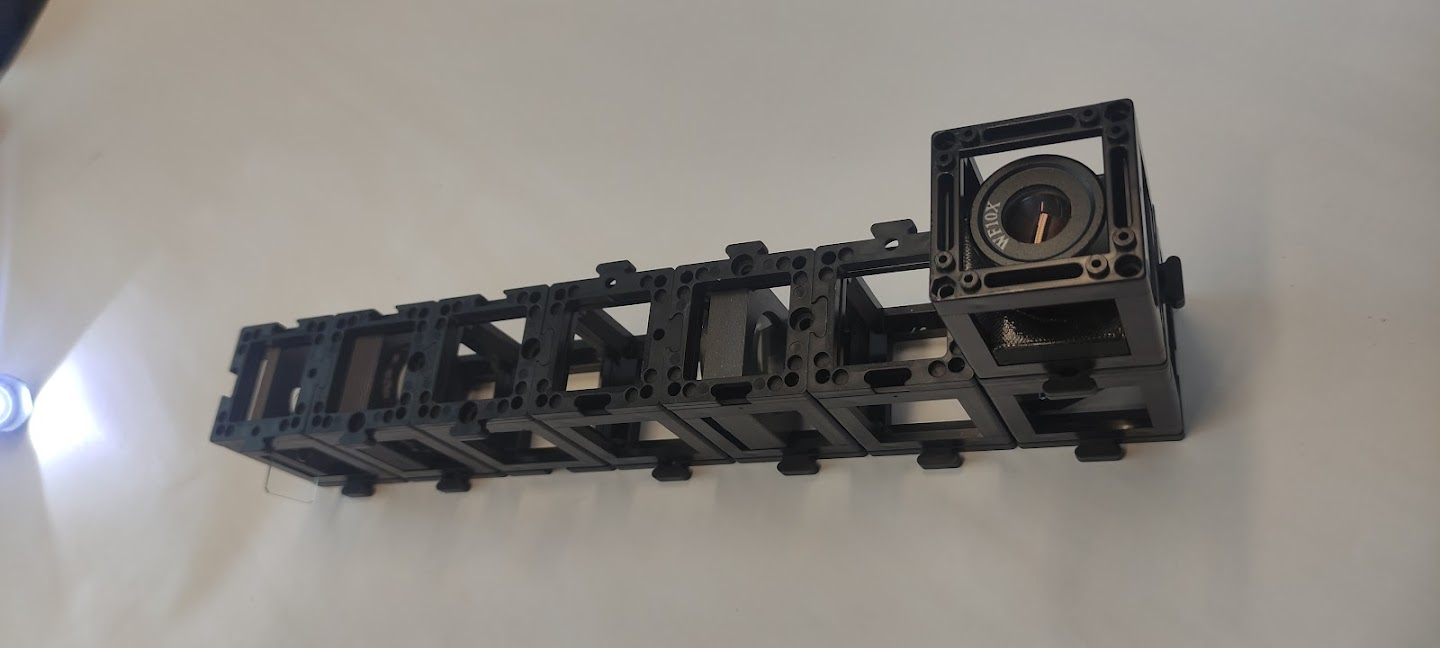 Eyepiece on top of the mirror — mind its orientation.
- Switch on the torch, look down into the eyepiece, and slide the objective/tube lens gently in their cubes until the sample is sharp.
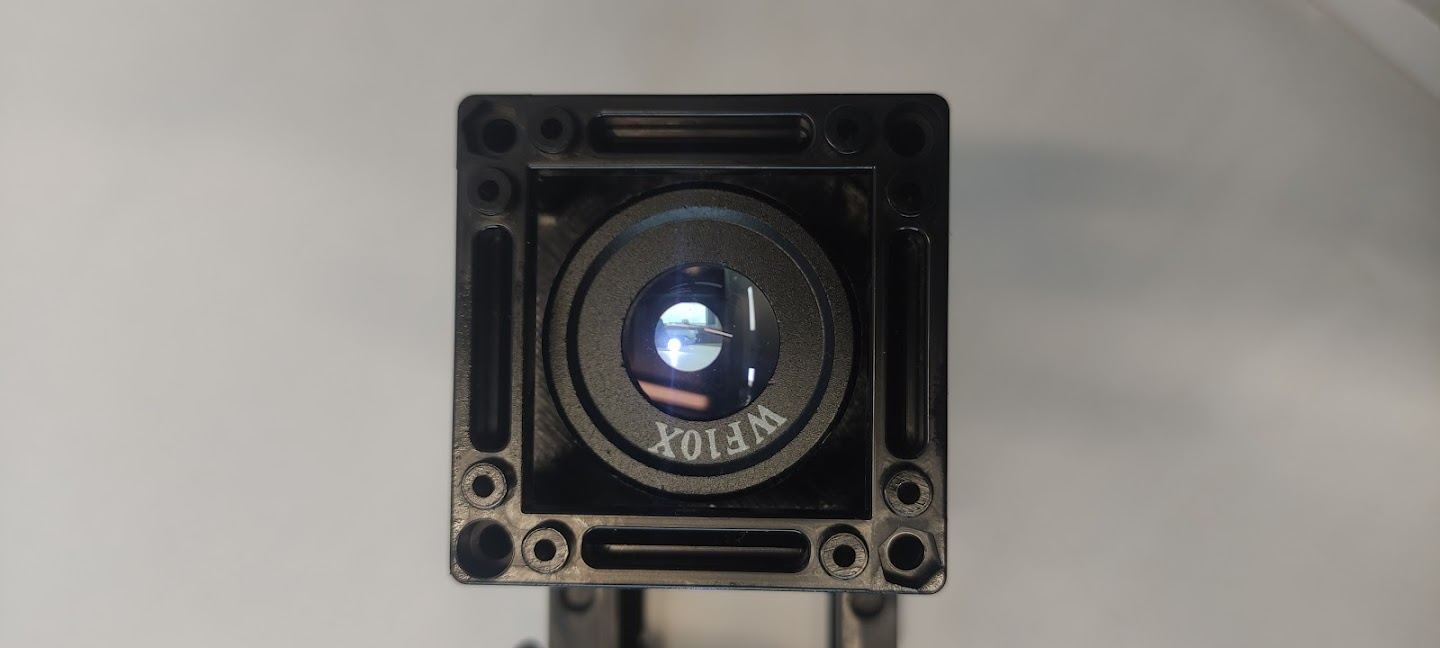
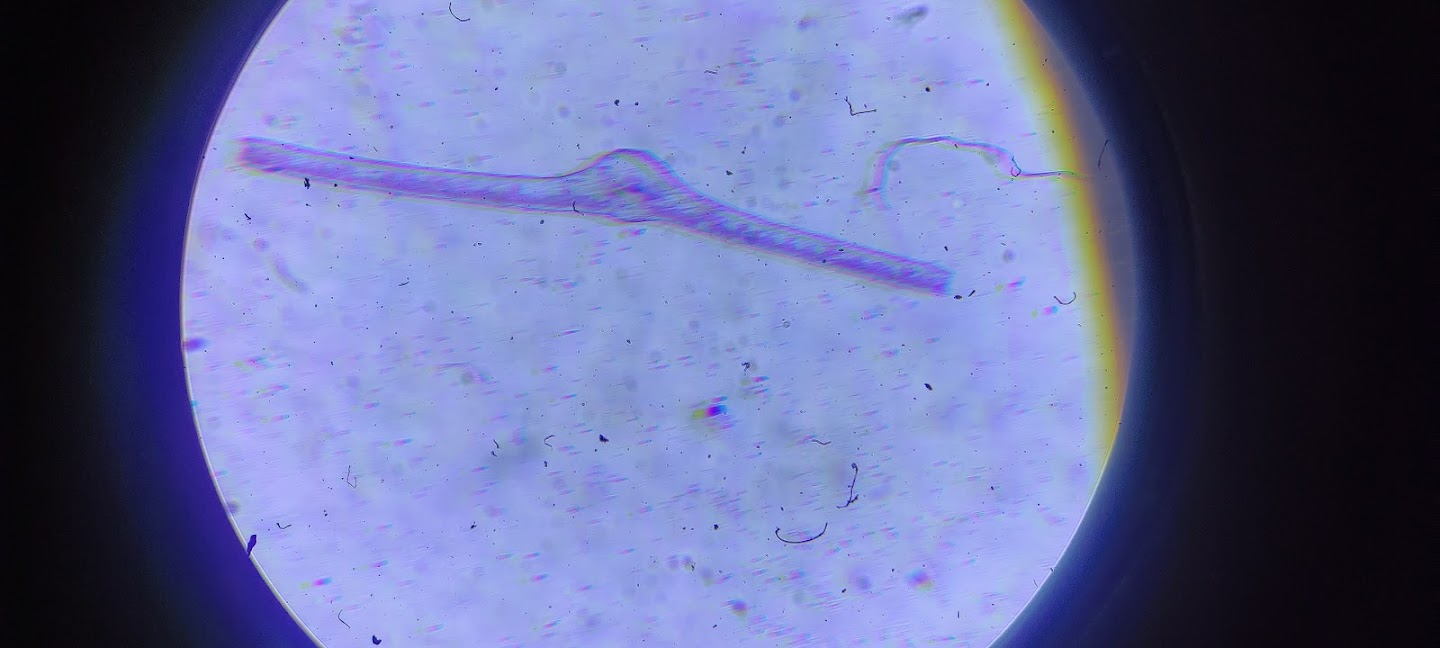 If you see nothing, re-centre the slide first — alignment is everything.
Variant without the eyepiece: project the intermediate image
Skip mirror and eyepiece and let the tube lens throw the image directly onto a paper screen ~100 mm behind it — a microscope you can watch as a group:
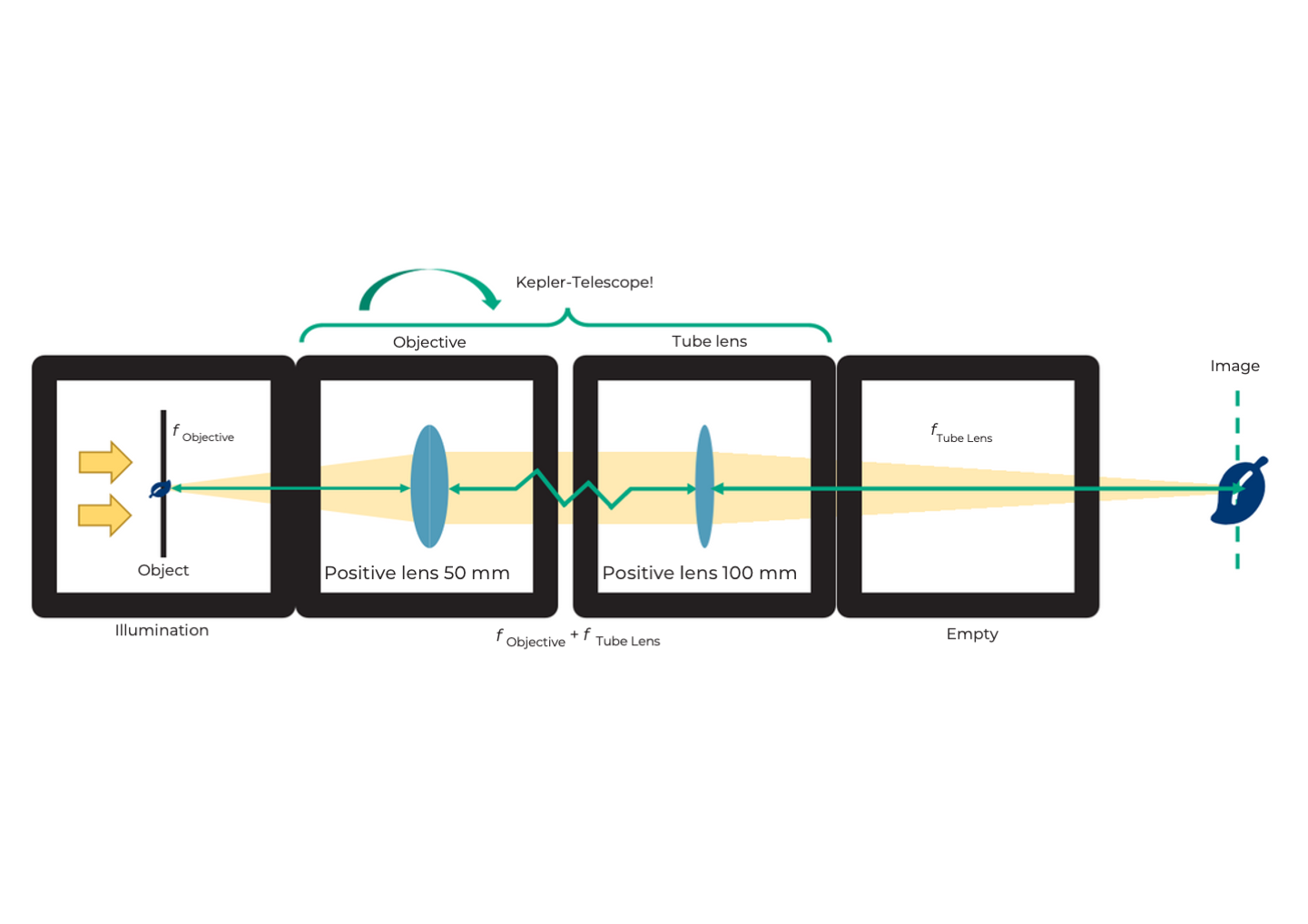 Schematic: sample → objective → tube lens → screen.
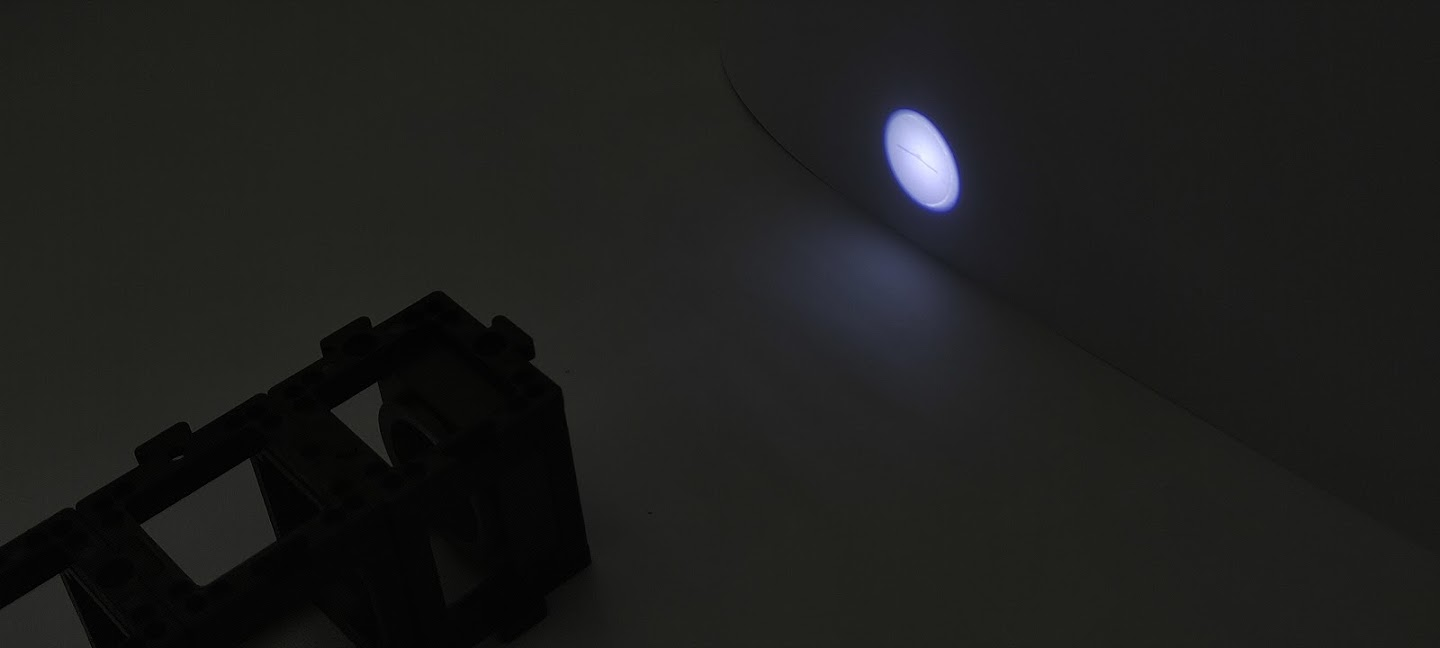
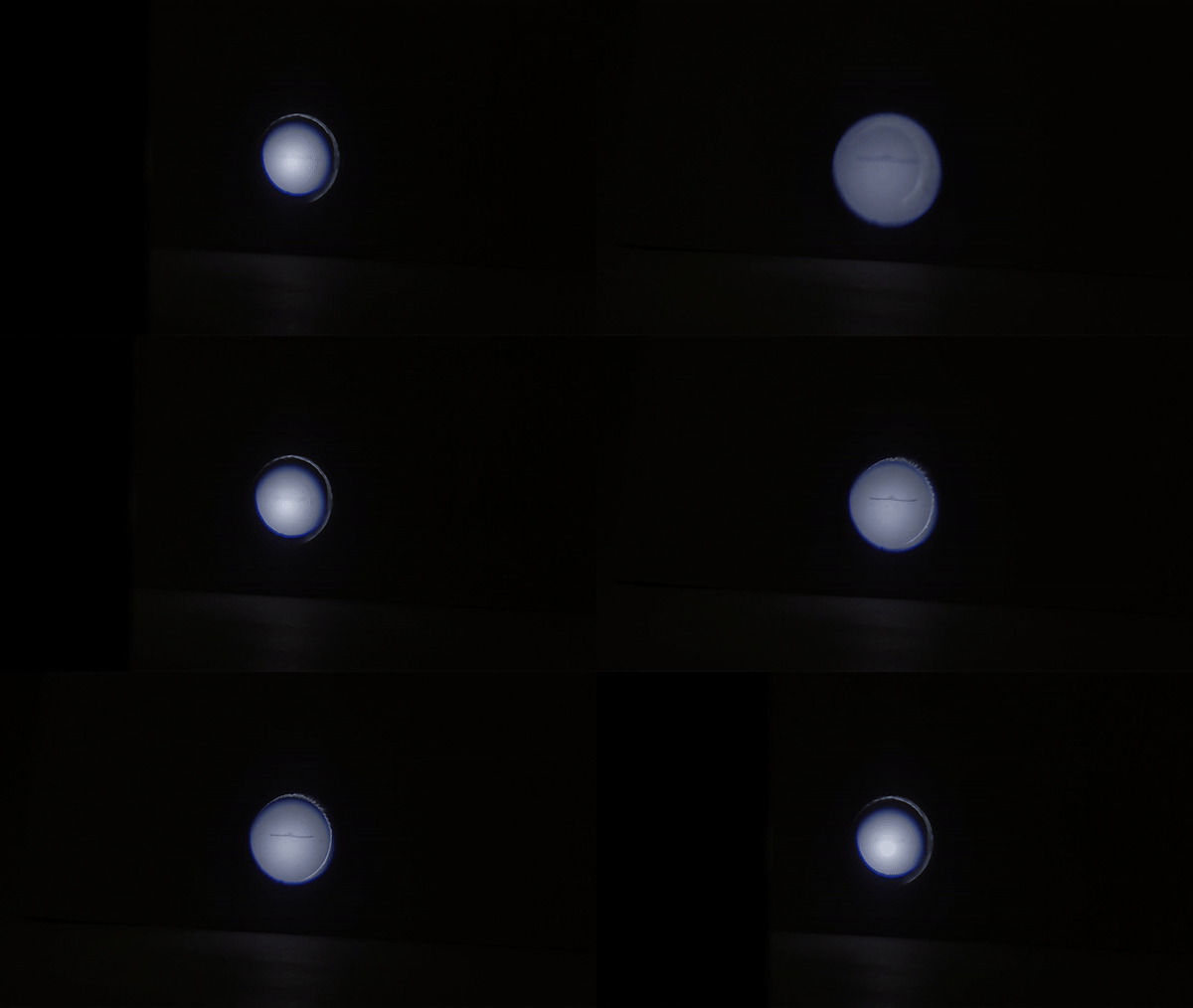 Dim the room and the intermediate image appears on the paper.
The experiment that gives the design its name
With the image sharp, change the distance between objective and tube lens — the image doesn't move and stays sharp:
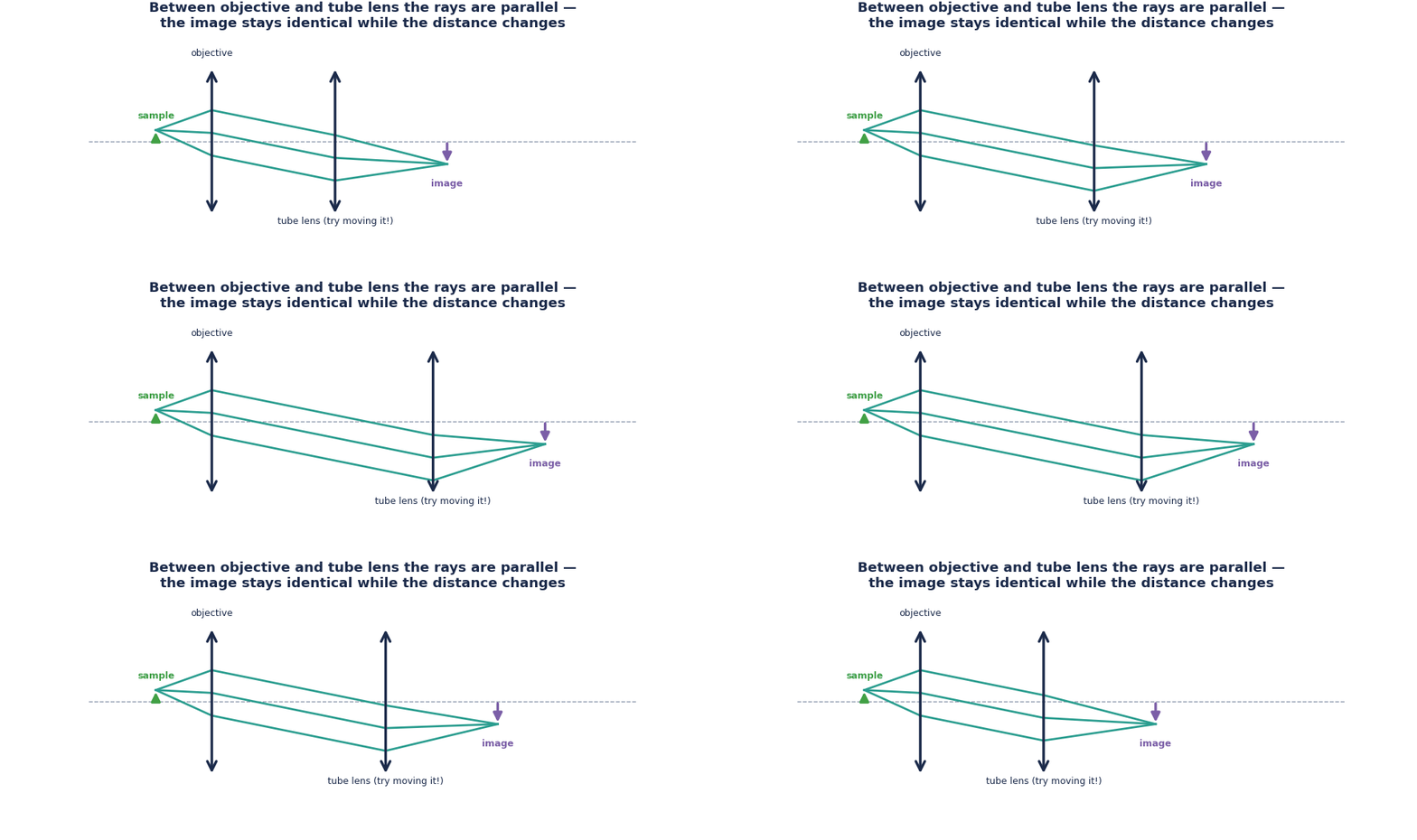
Between the two lenses the rays travel parallel ("to infinity"). That's why modern microscopes are built this way: filters, beam splitters and other modules can be dropped into this space without shifting the image. Full story: How a microscope works.
Related
- Build the finite microscope — the classical alternative with the real 4× objective
- How a microscope works