How to troubleshoot the smartphone microscope
Task-oriented. Match your bad image to the pictures below; each has a one-line cause and fix.
This is what you're aiming for — a fully working setup and a clean image:
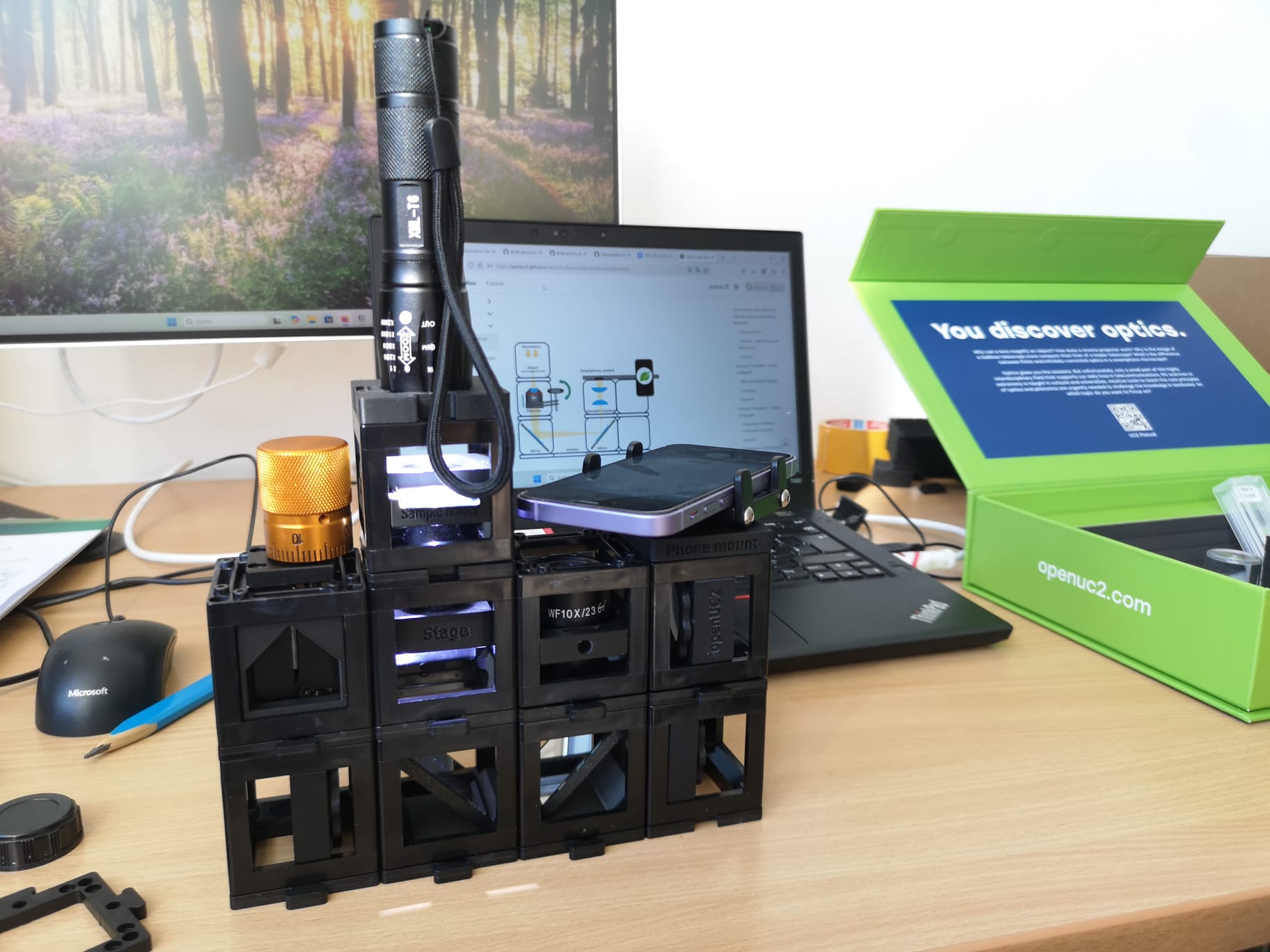 The reference setup.
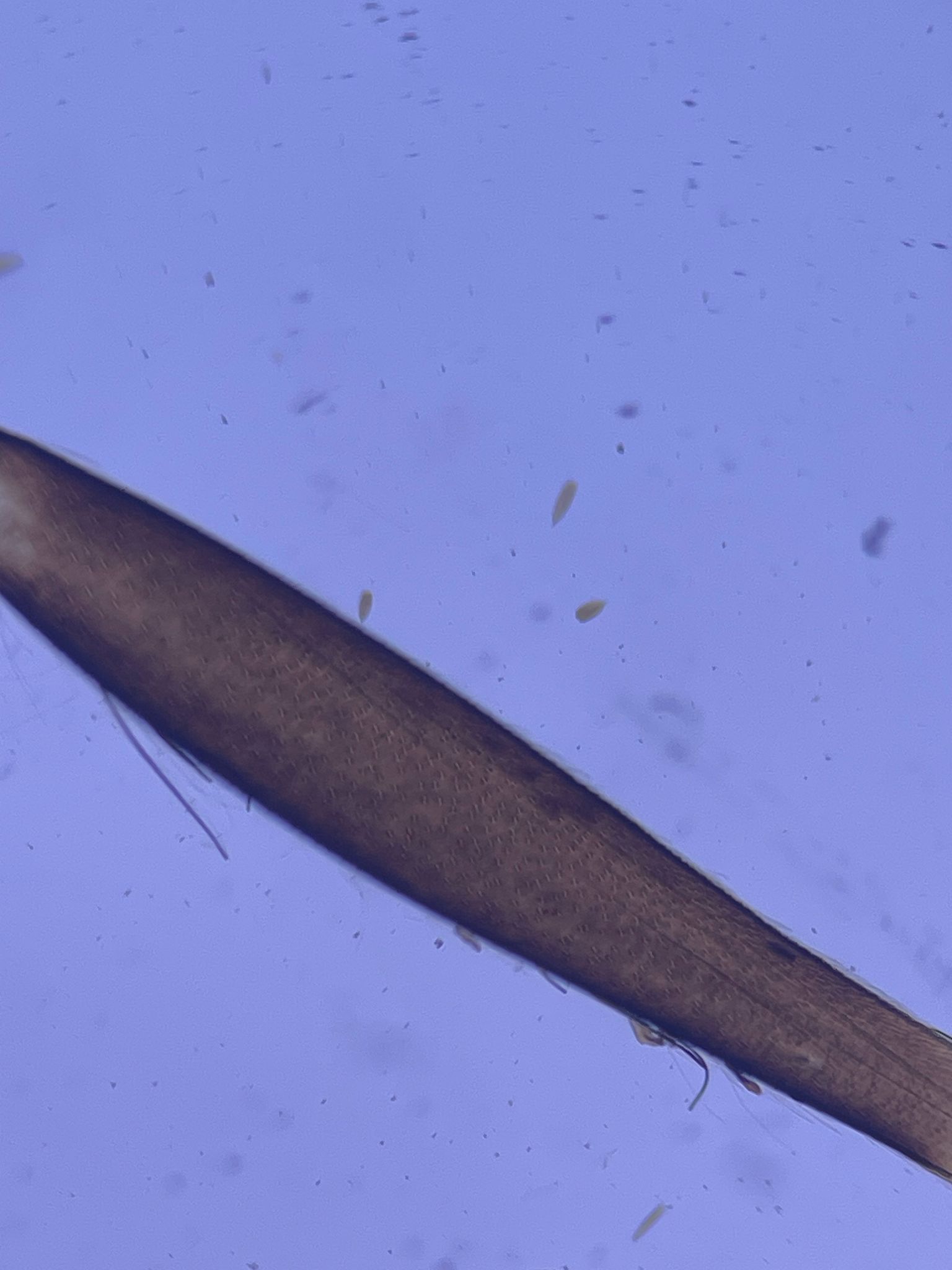 The reference image: even illumination, good contrast, sharp across the field.
Stripes across the image
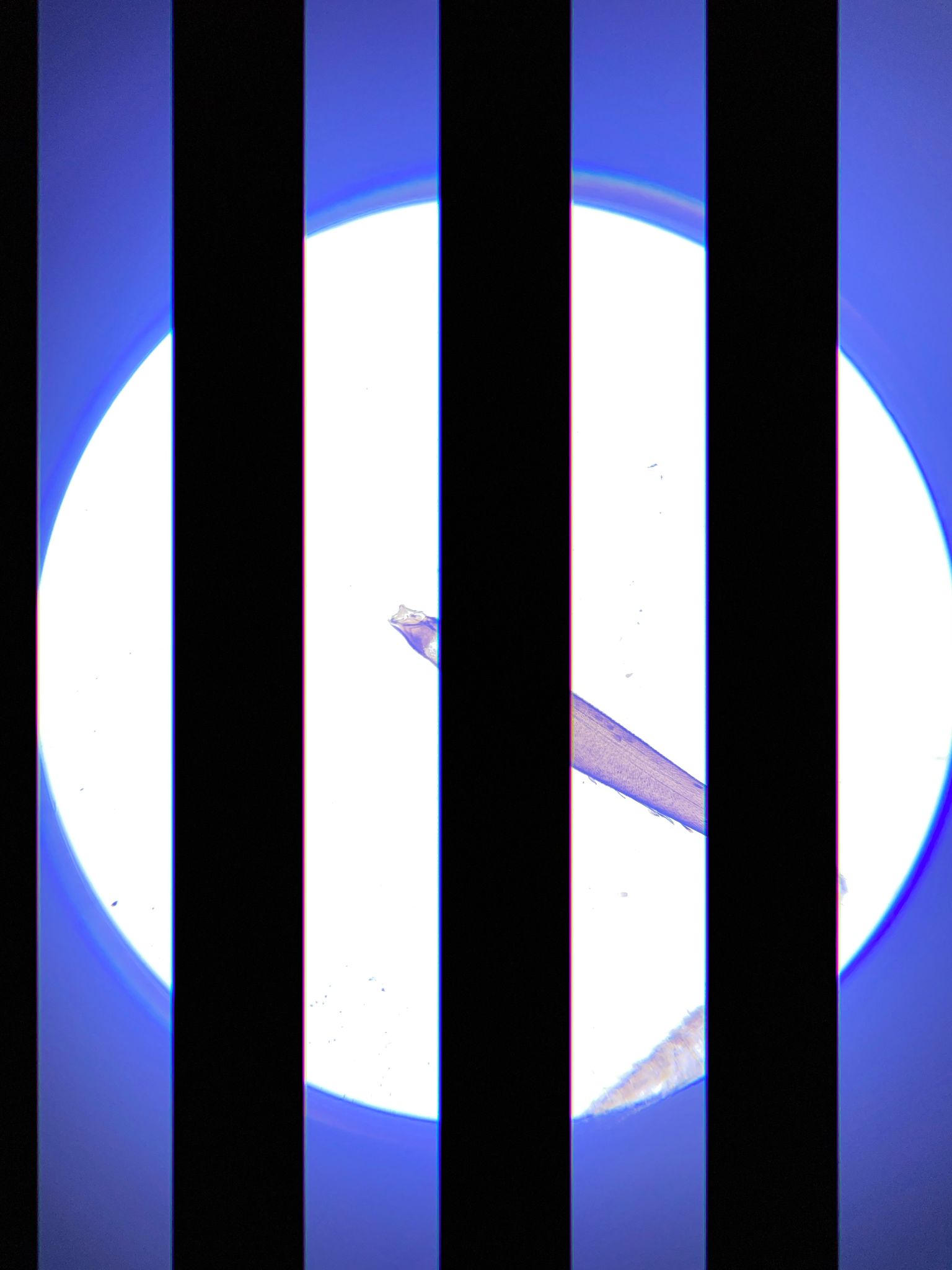
Cause: the torch is in a blinking/PWM mode; its flicker beats against the phone's rolling shutter. Fix: press the torch button repeatedly until you reach the brightest, constant mode.
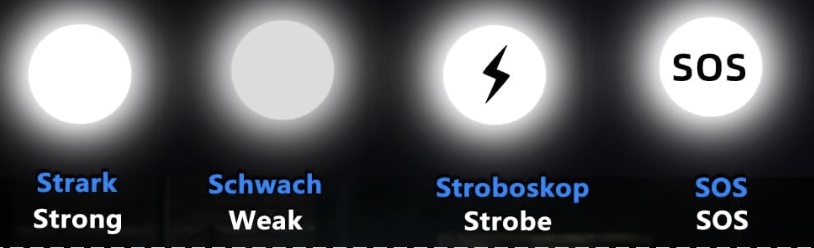 The torch has several modes — you want steady maximum, not strobe/morse.
One bright hotspot, dark surroundings
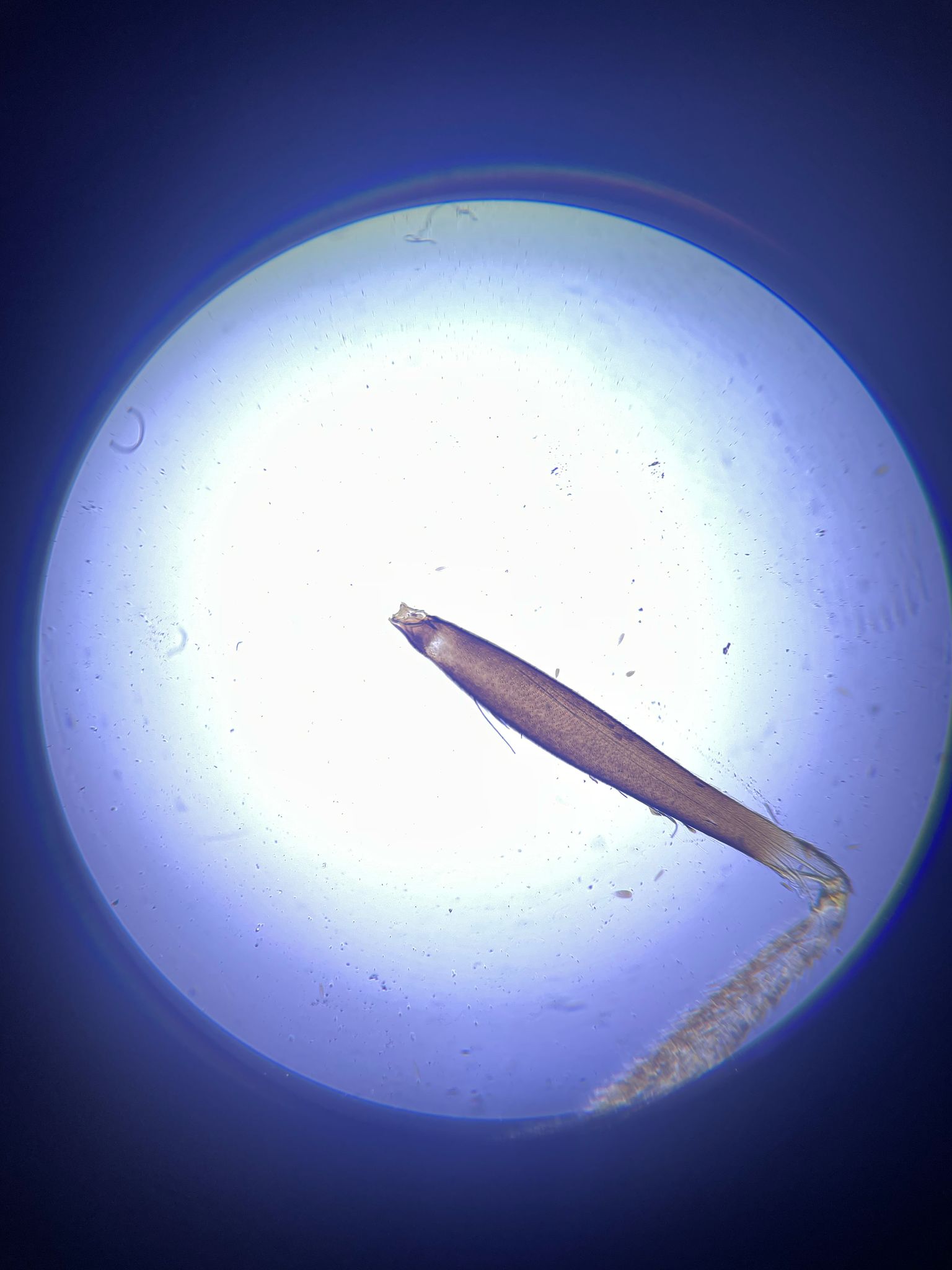
Cause: the torch's front lens is focused too tightly. Fix: the torch head slides to refocus — adjust it until the sample is lit evenly. (Bonus physics: when the LED is imaged into the condenser's focus you've built Köhler-style illumination.)
Everything washed out / overexposed
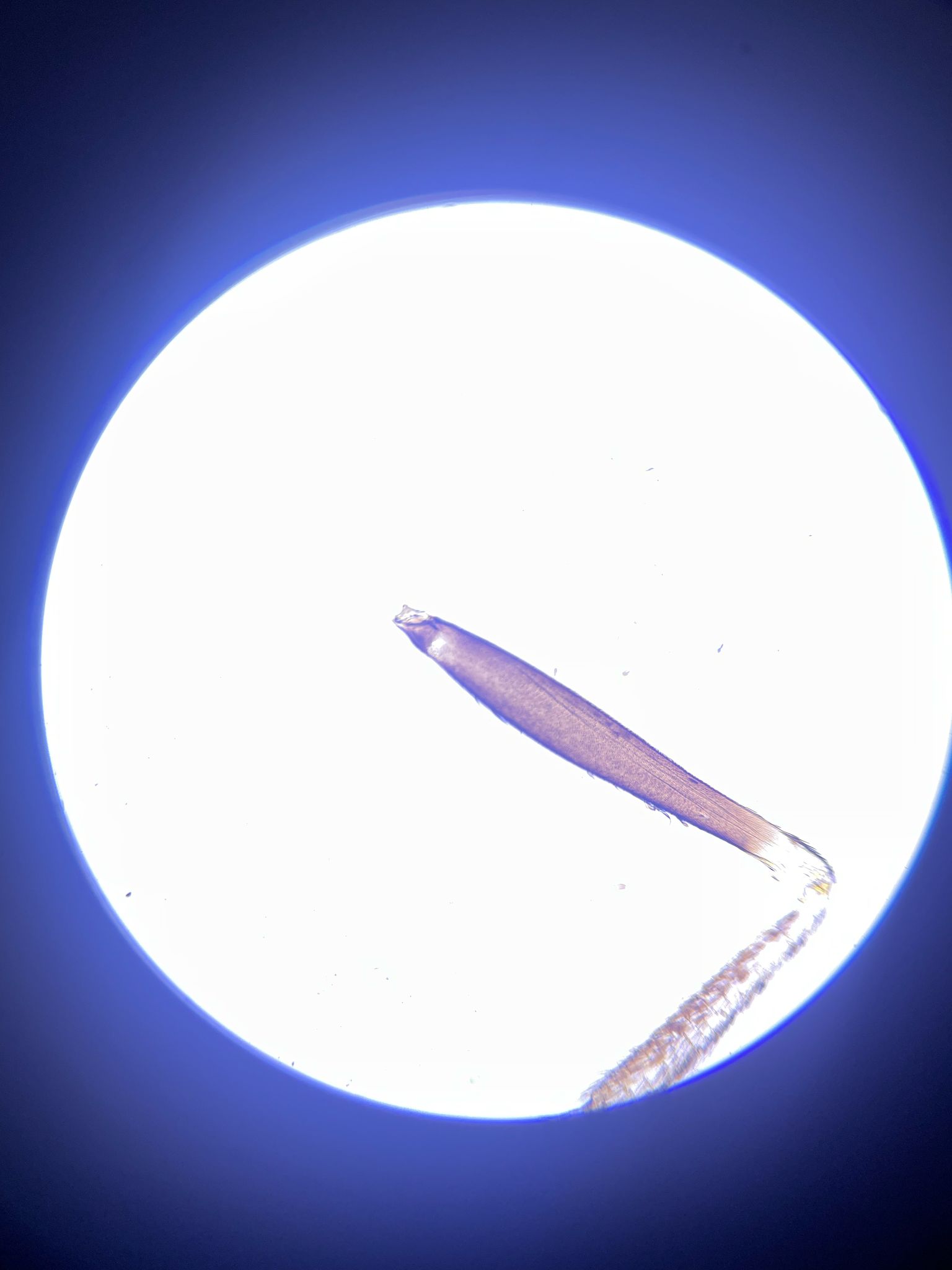
Cause: too much light. Fix: put a paper diffuser between torch and sample, tap the phone screen to lock exposure on the sample, or use half-empty batteries. A diffuser also smooths the illumination:
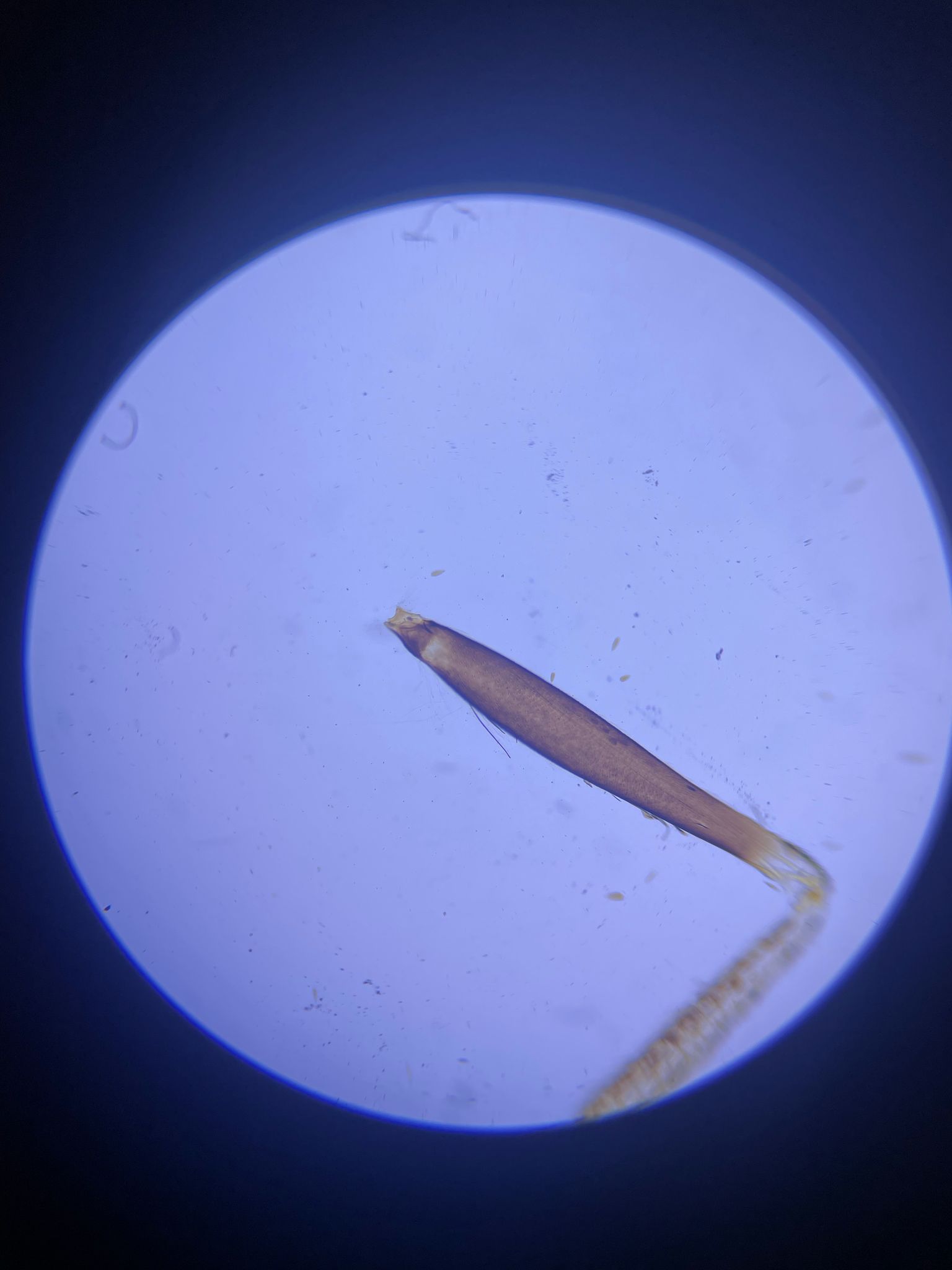 With diffuser: lower contrast, but pleasantly even.
Image only fills a small circle / dark vignette
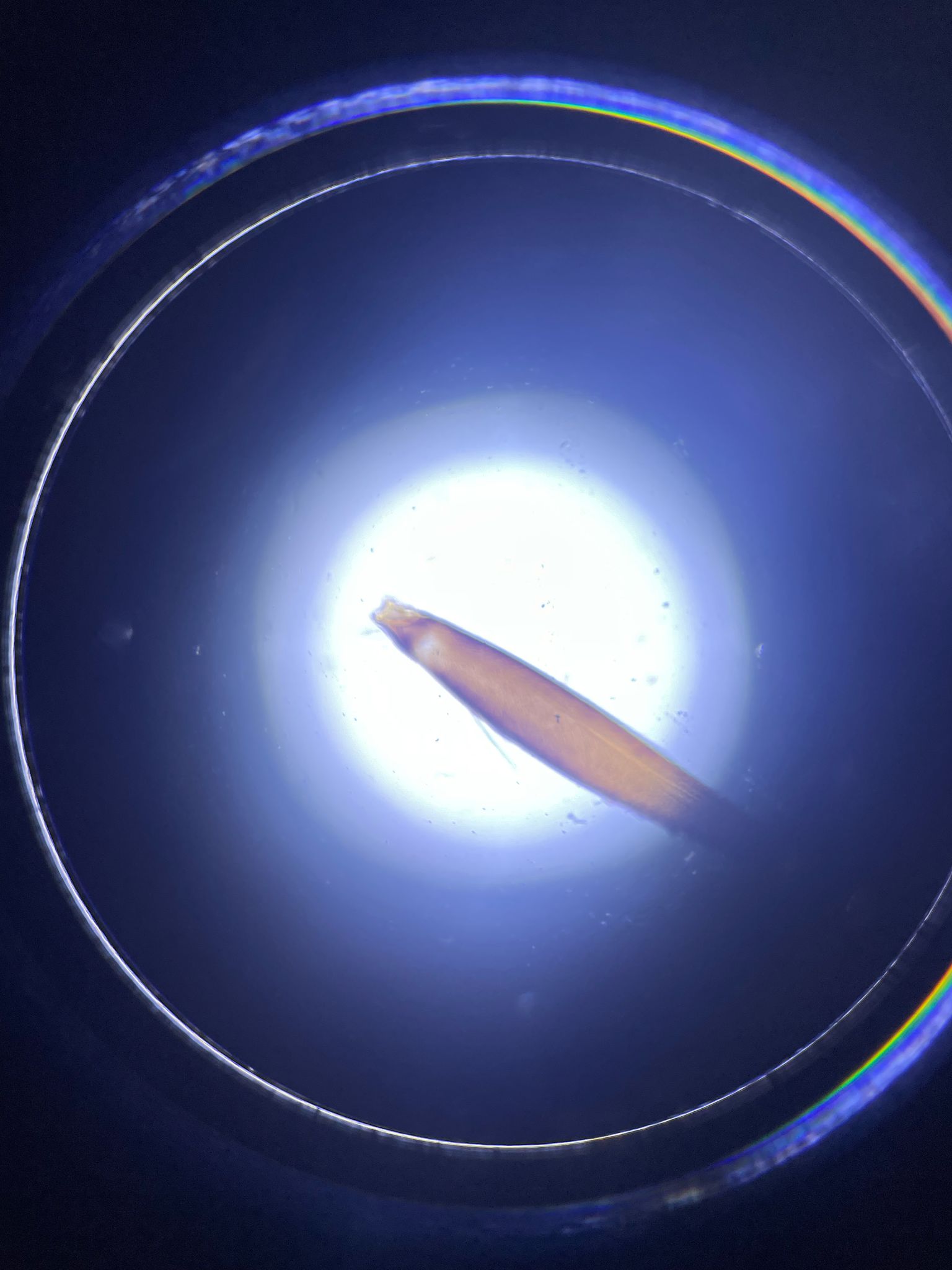
Cause: the phone camera is too far from the eyepiece — the exit pupil of the eyepiece must land on the camera's entrance pupil. Fix: lower the phone until it (almost) touches the eyepiece, and centre it until the full circle lights up.
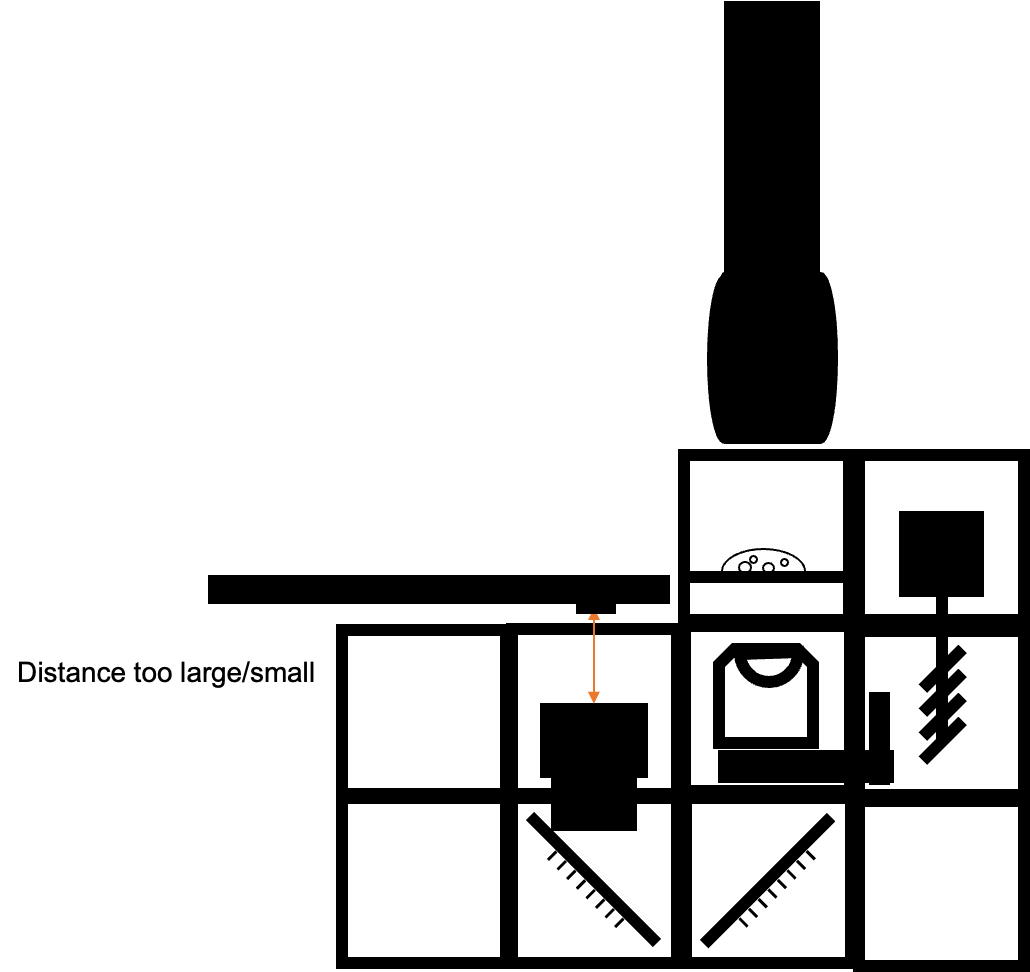 Match the eyepiece exit pupil to the camera pupil.
Shadows / relief instead of even brightness
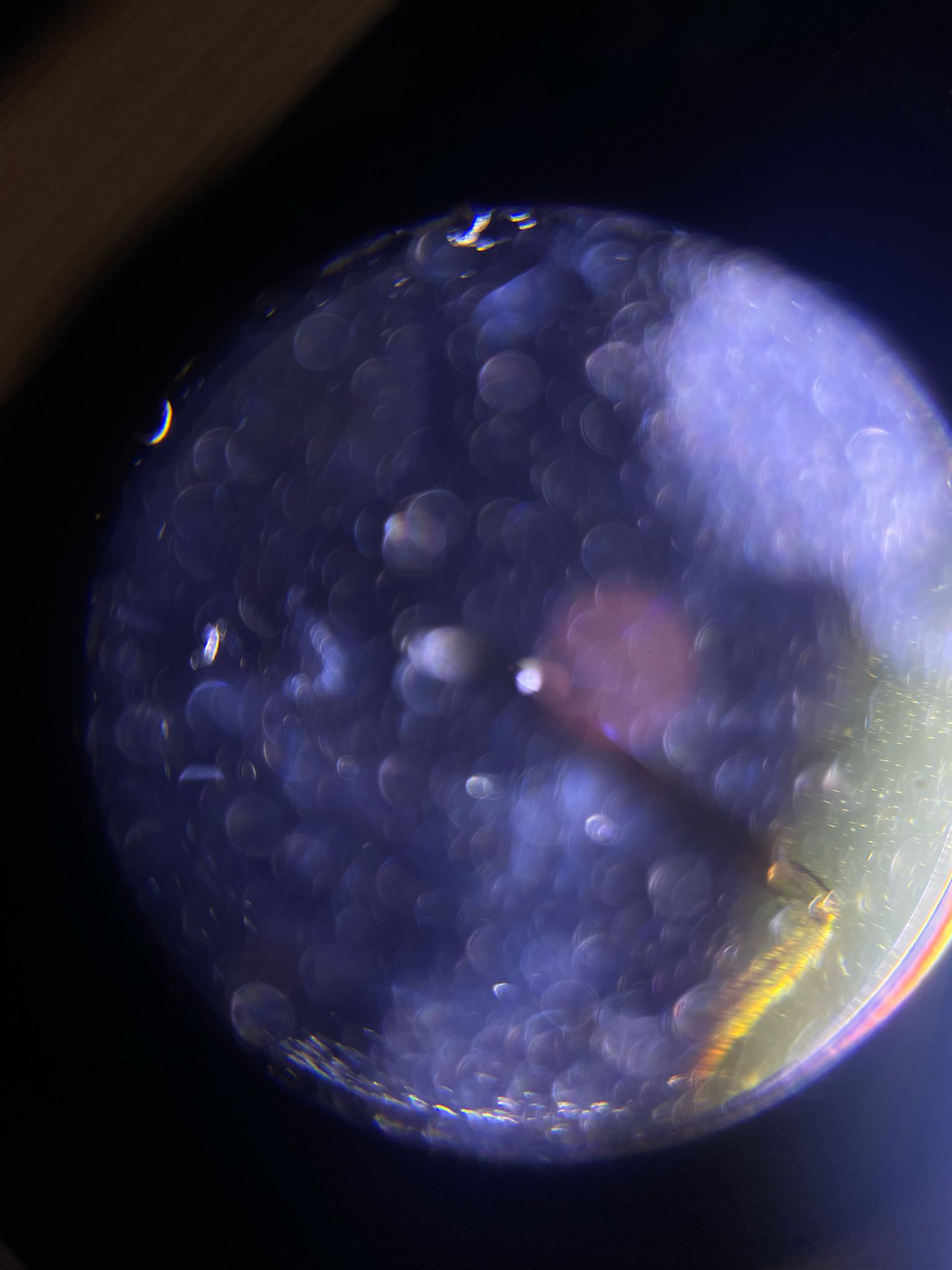
Cause: the torch is off-axis; light hits the sample at an angle. Fix: re-centre the torch above the condenser — or keep it: oblique illumination adds contrast to transparent samples and is a legitimate technique.
 Oblique illumination geometry.
Push it to the extreme (no direct light reaches the objective) and you get darkfield: bright structures on a black background.
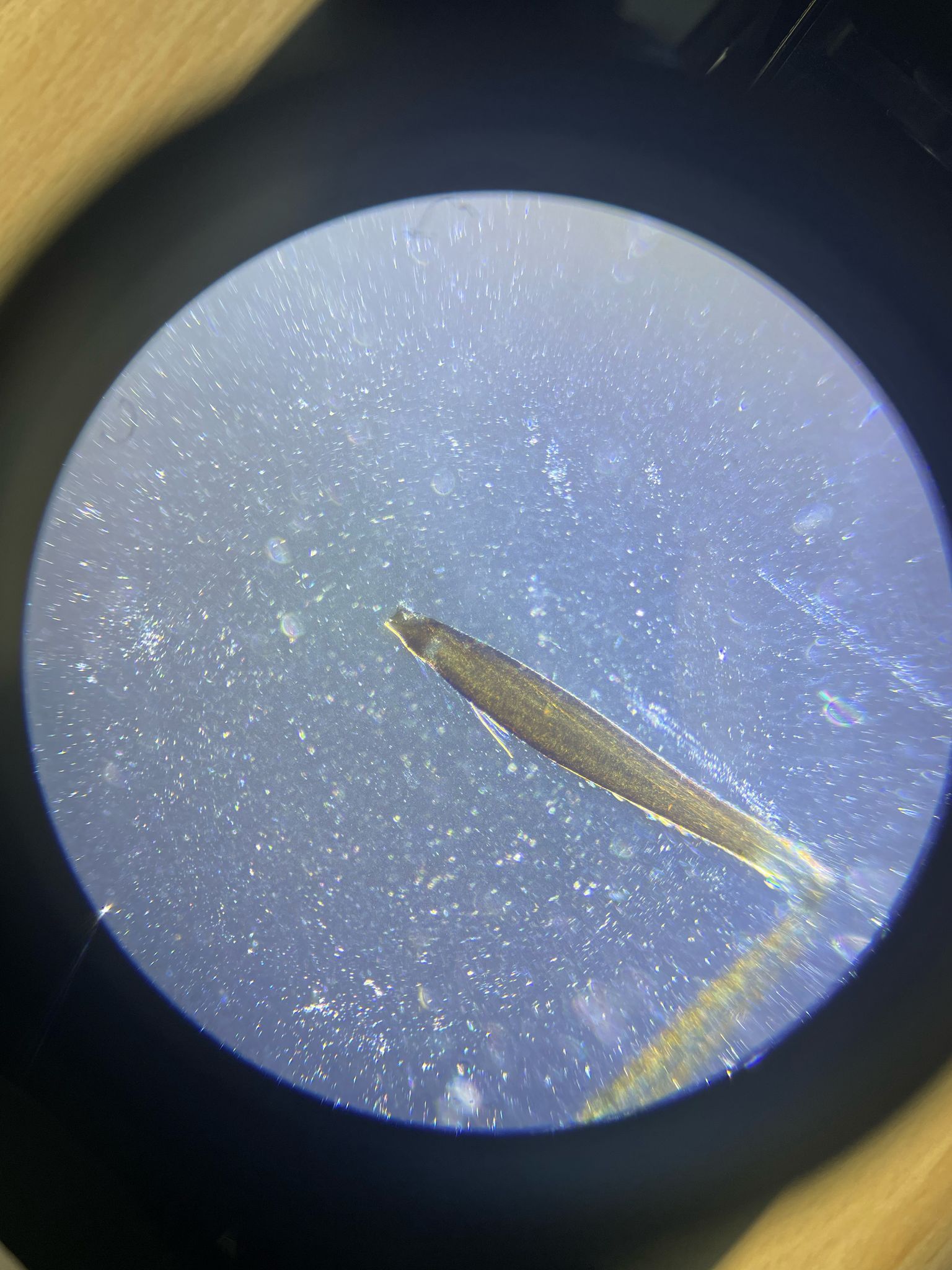 Darkfield with the CoreBox: very oblique light only.
Still stuck?
Work down this list in order:
- Sample centred over the objective? (Most common issue by far.)
- Focus range: turn the Z-stage gear through its whole travel slowly; the focal plane of the 4× objective is thin.
- Everything on one axis? Objective, mirrors, eyepiece, camera — one tilted insert breaks the chain: Open and reconfigure a cube.
- Phone HDR/auto-enhance off for scientific images — it invents detail.