How to build the finite microscope
Task-oriented. You want the classical ("160 mm tube") microscope with the real 4× objective and proper gear focusing.
The 4× objective is a finite-corrected objective: it forms a real intermediate image at a fixed distance (160 mm mechanical tube length, printed on the barrel) which the eyepiece then magnifies.
Magnification:
Insert the focal length / magnification of the Ramsden eyepiece shipped in the CoreBox (e.g. "10×, f = 25 mm" → total 40×). The old docs never state it.
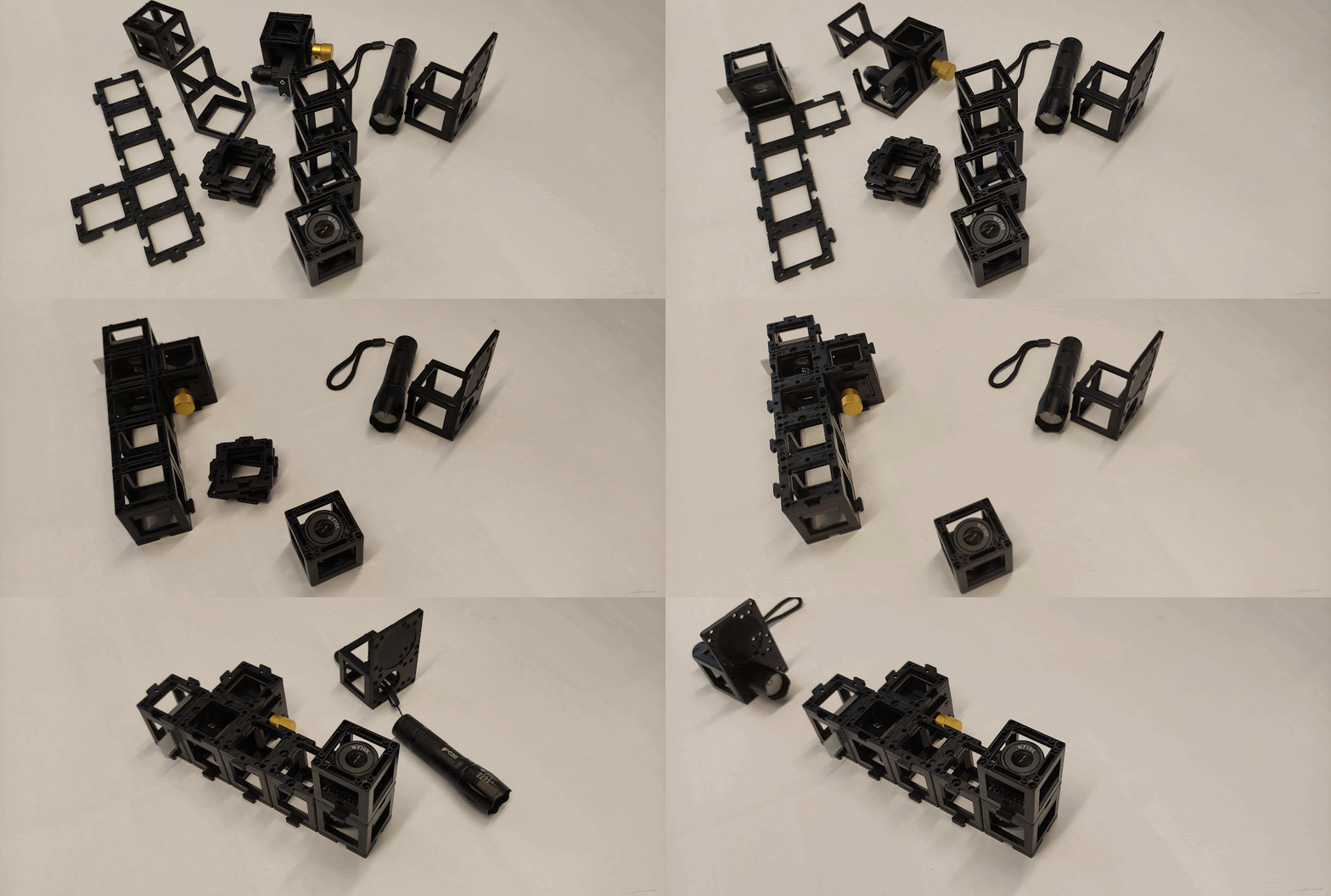 The finite microscope in action.
What you need
- Z-stage cube with the 4× objective screwed in
- Sample holder cube + sample
- 50 mm lens cube, insert rotated 90°, or the Ramsden eyepiece cube (viewing from above)
- 1× 45° mirror cube
- 2–3× empty cubes
- 10–12× puzzle base plates
- Torch with holder
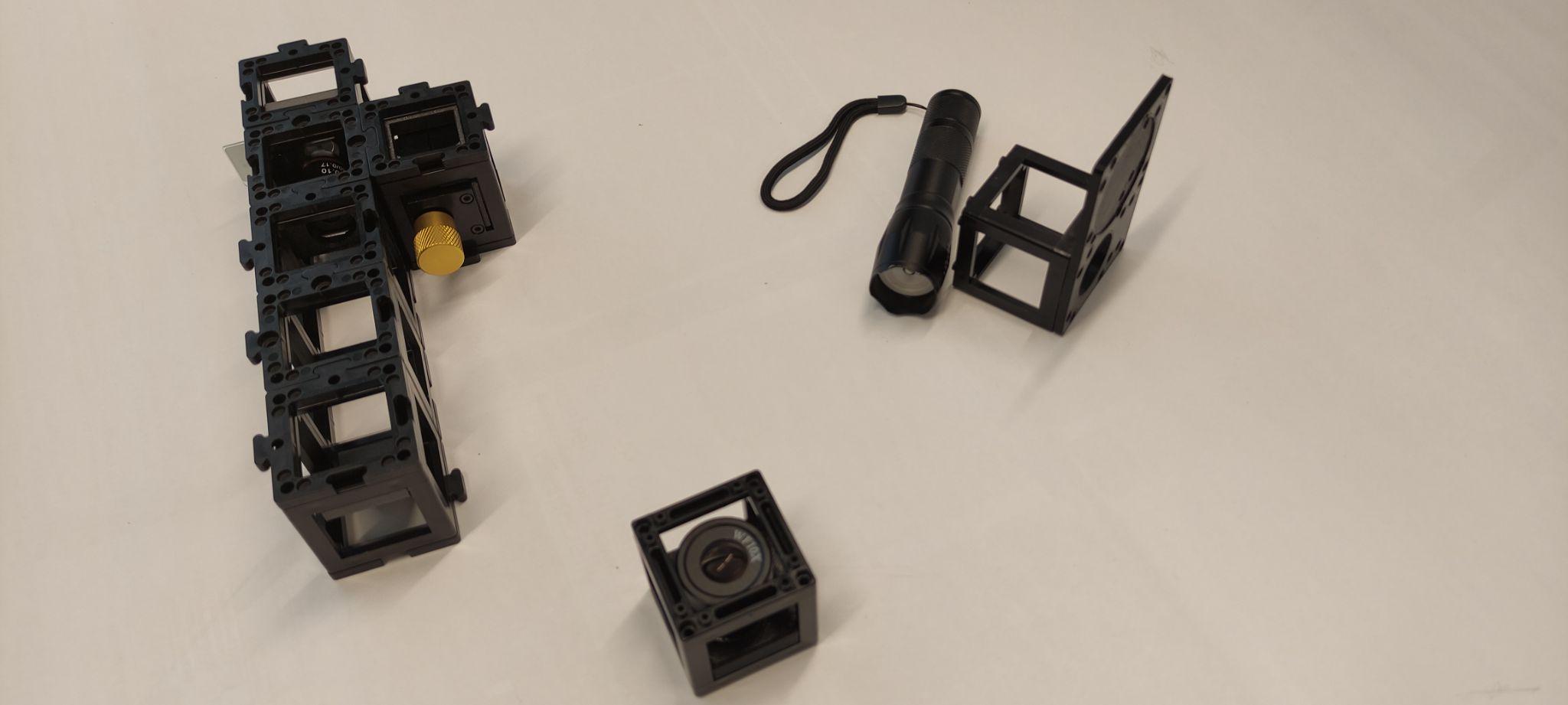
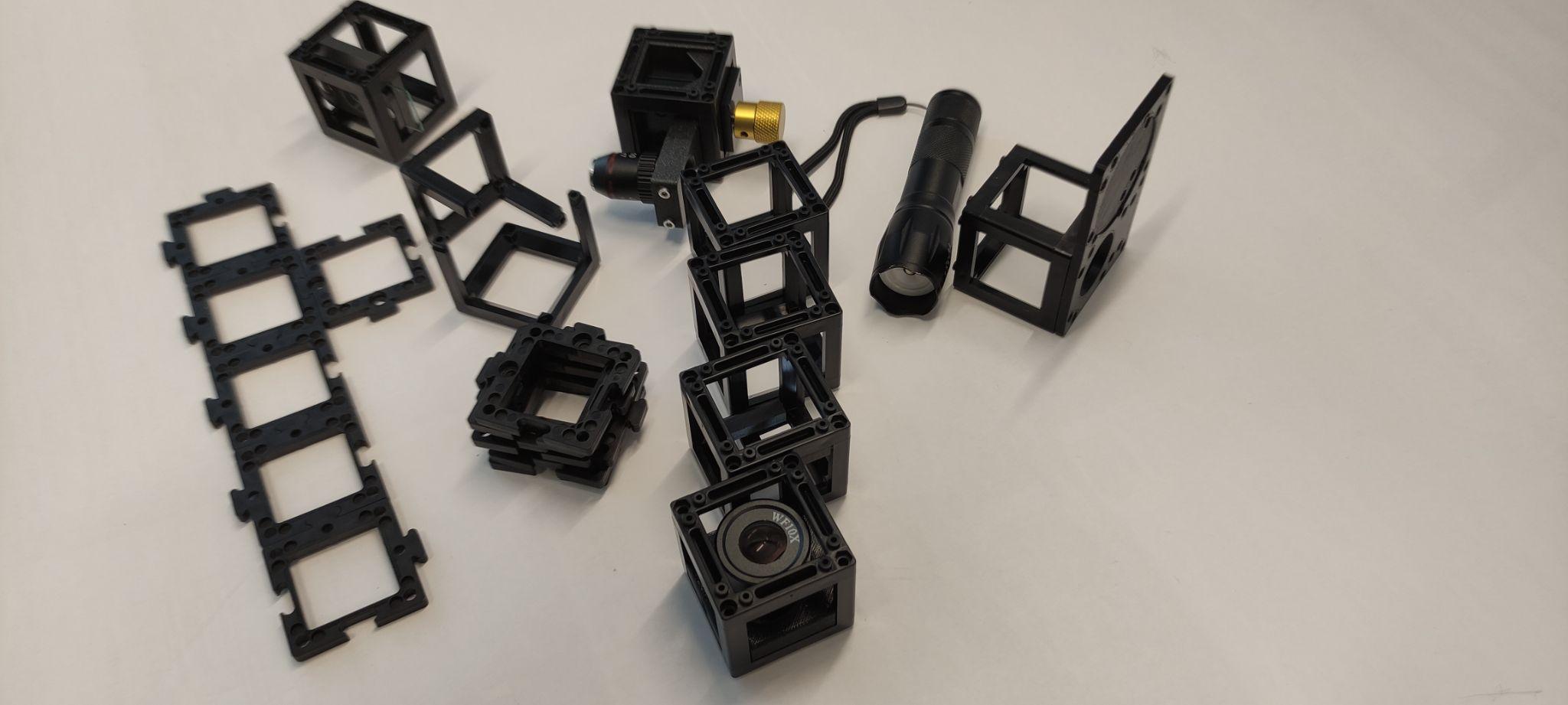 Parts and base-plate layout.
The plan (side view)
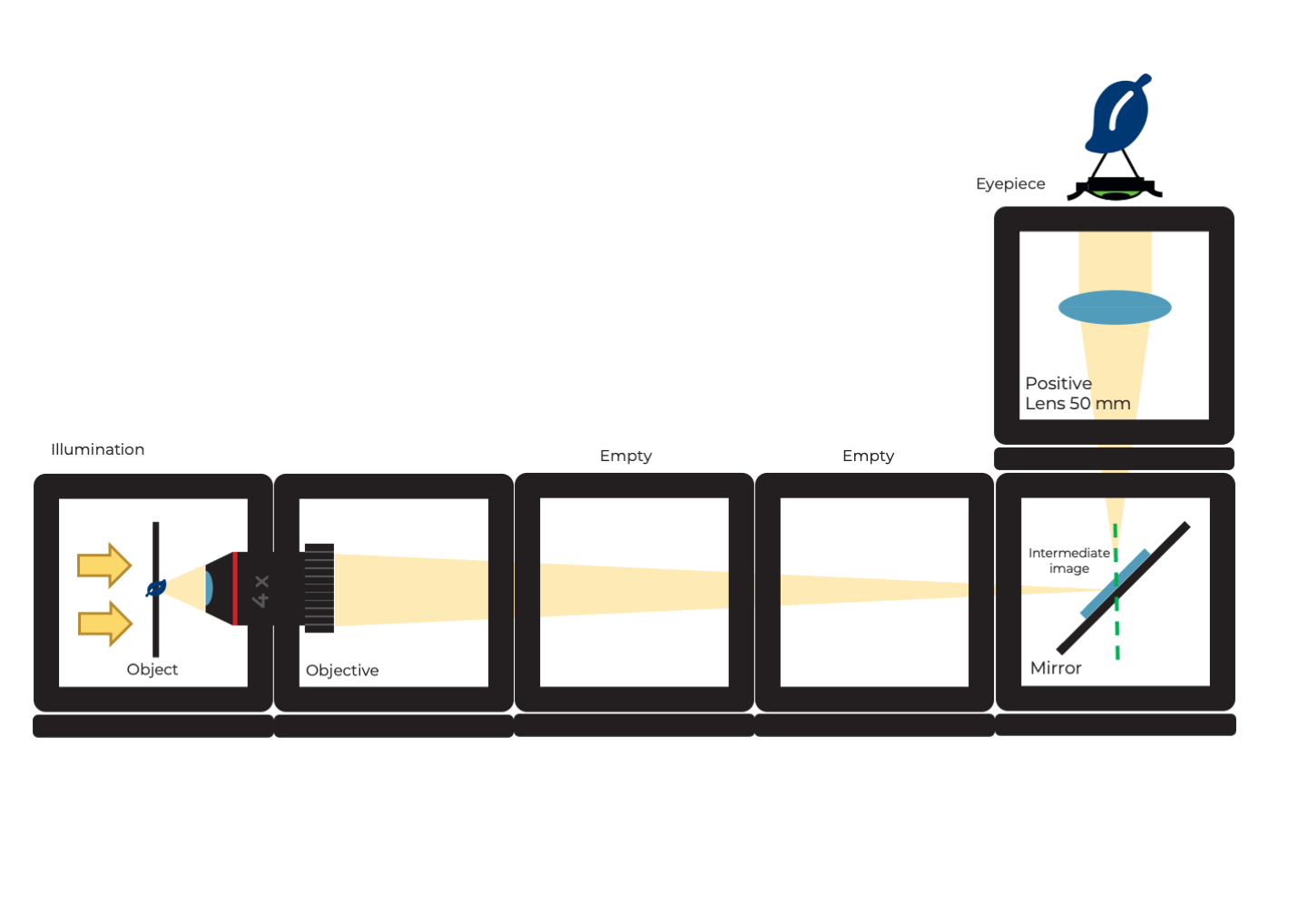 Sample → 4× objective (on Z-stage) → empty cubes create the 160 mm tube → mirror →
eyepiece.
Sample → 4× objective (on Z-stage) → empty cubes create the 160 mm tube → mirror →
eyepiece.
Steps
-
Click 5 base plates in a row; put the sample holder at the front.
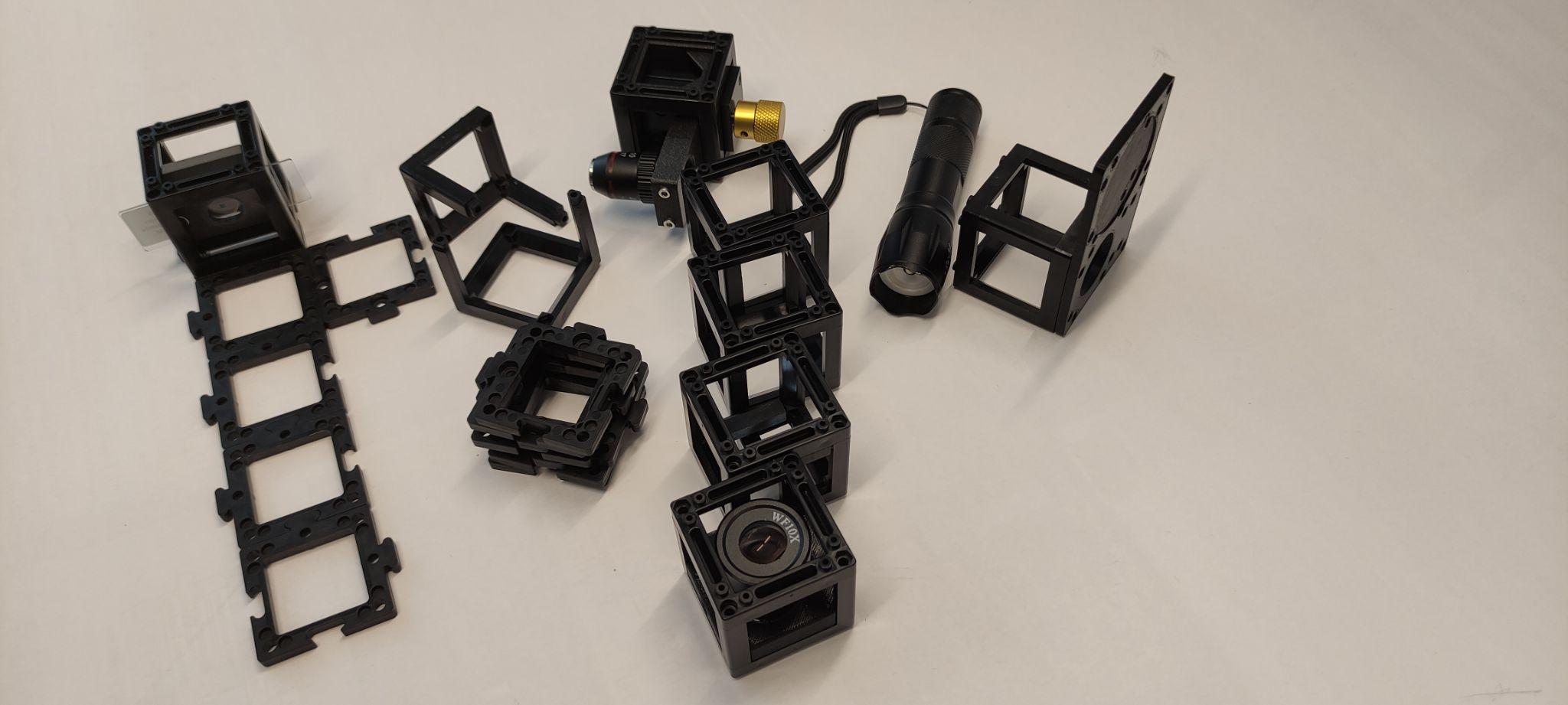
-
Assemble the objective cube: thread the 4× objective into the Z-stage insert and close the cube around it.
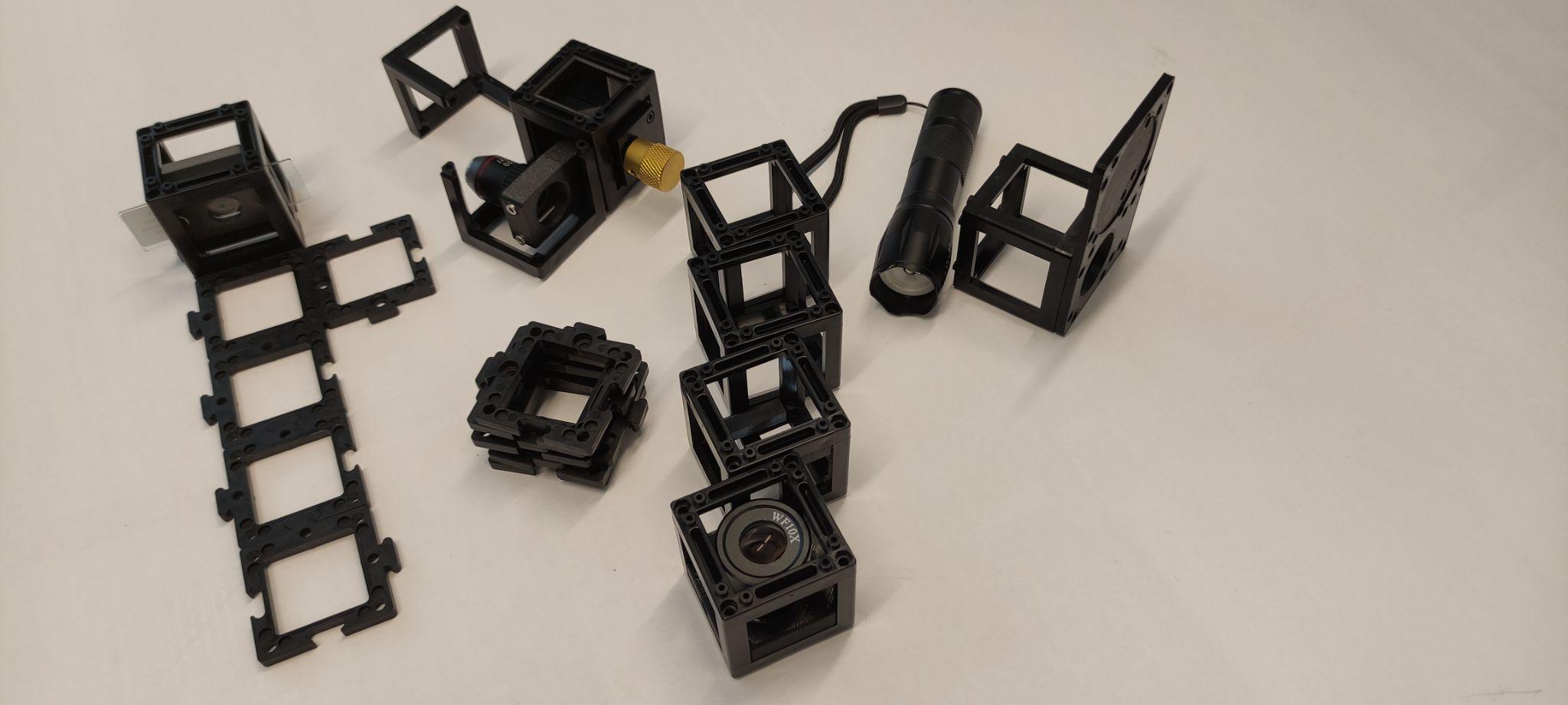
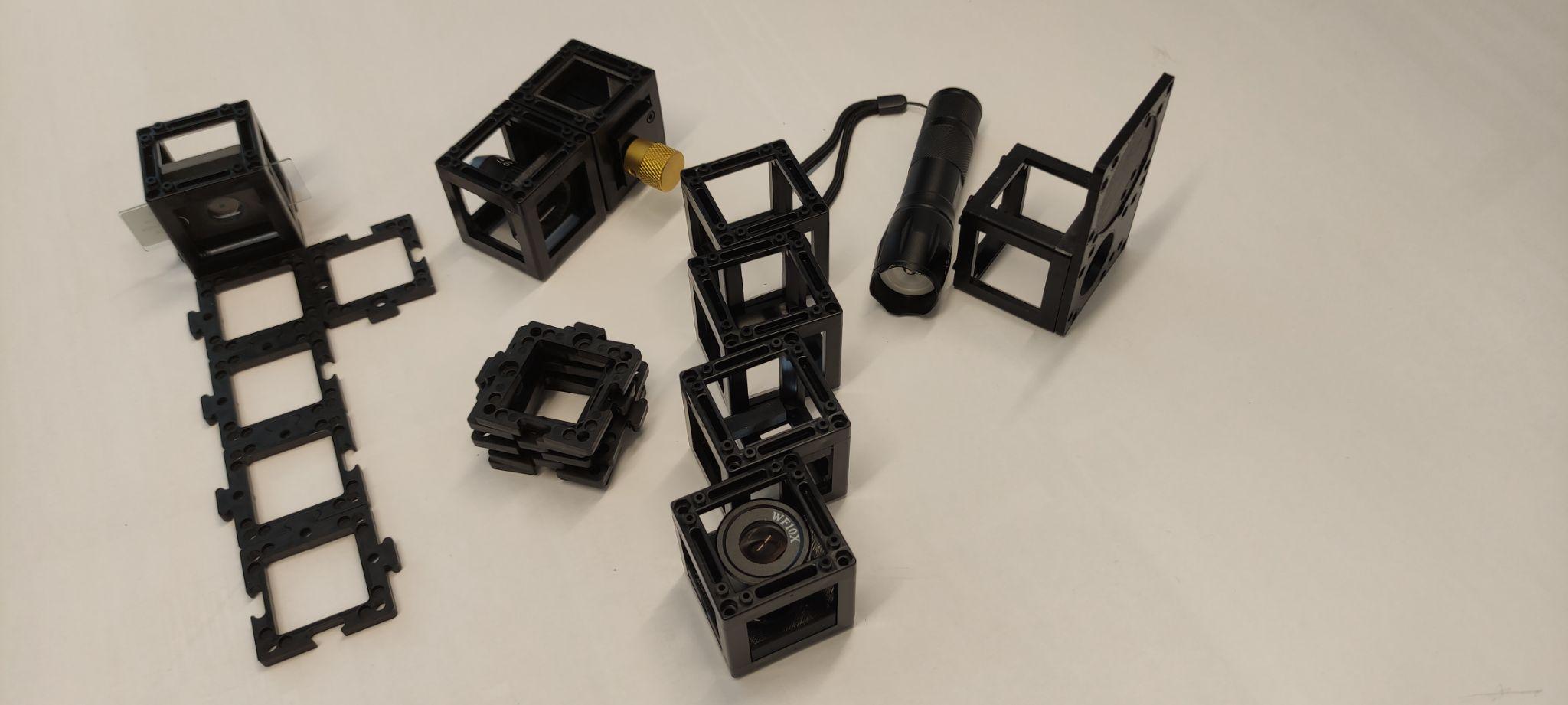
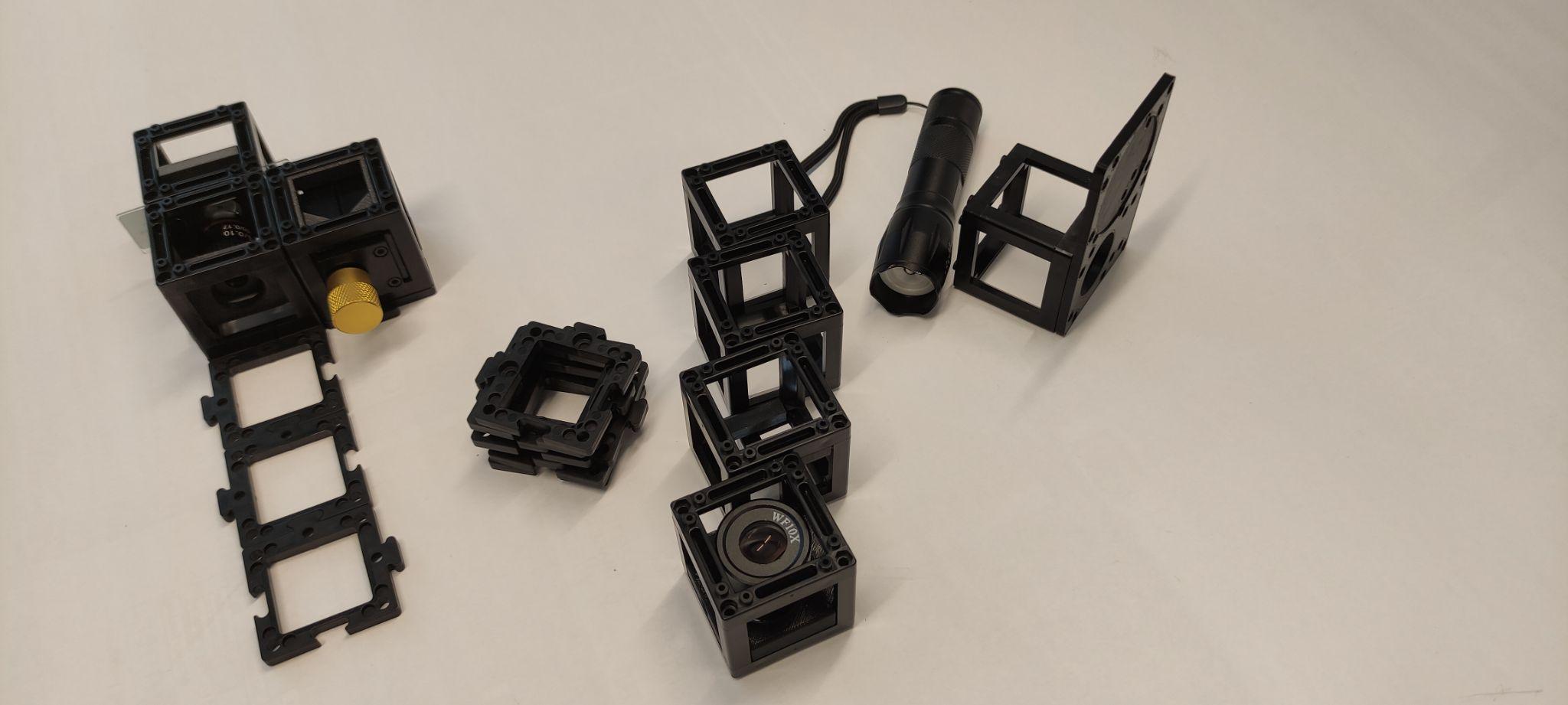 Which of the two RMS threads?
The Z-stage has two threaded positions offset by 5 mm. If a puzzle plate sits between the Z-stage cube and the neighbouring cube, use the thread closer to the edge; without a plate, the inner one.
-
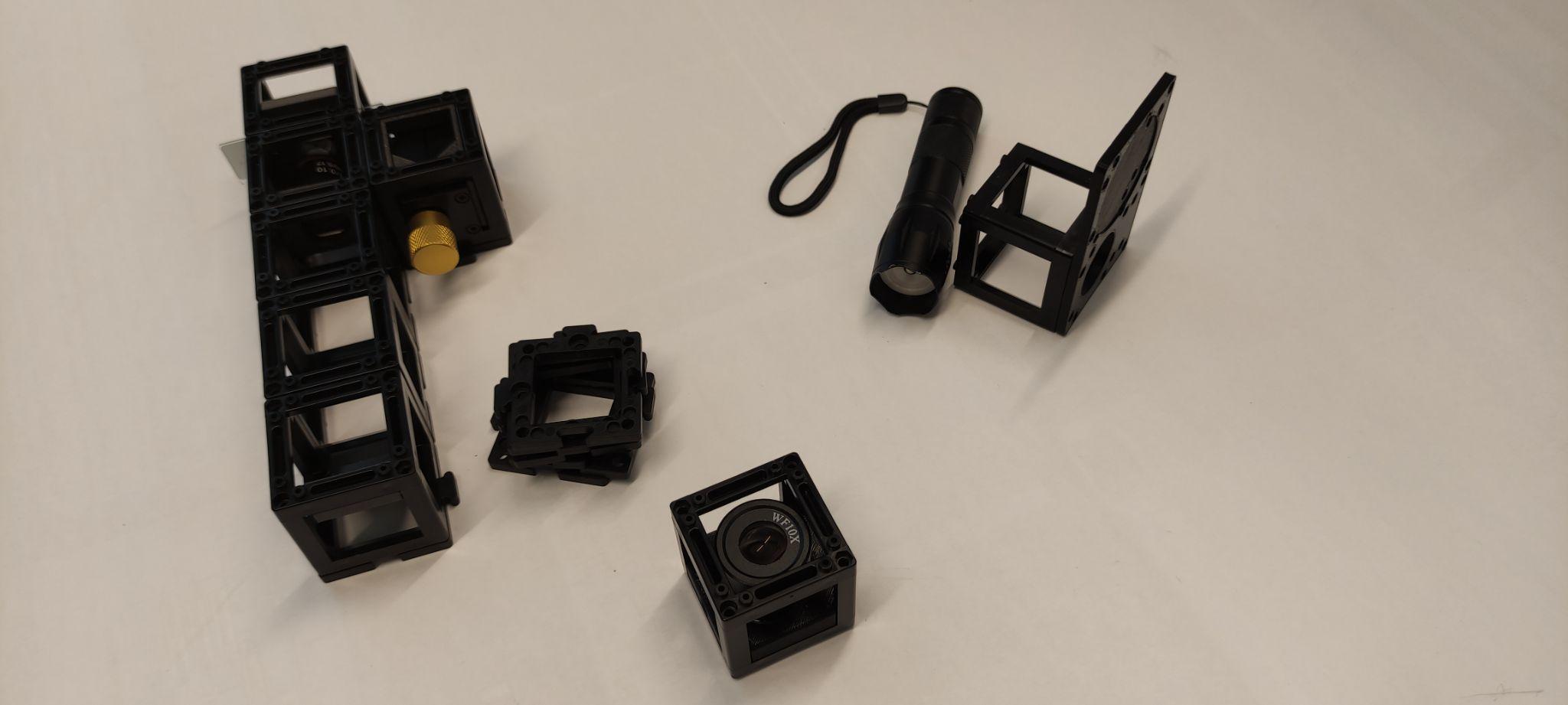
Place the objective cube next to the sample, then 2–3 empty cubes (they form the tube), and at the end the 45° mirror cube, mirror face up.
-
Lock the row with base plates on top.
-
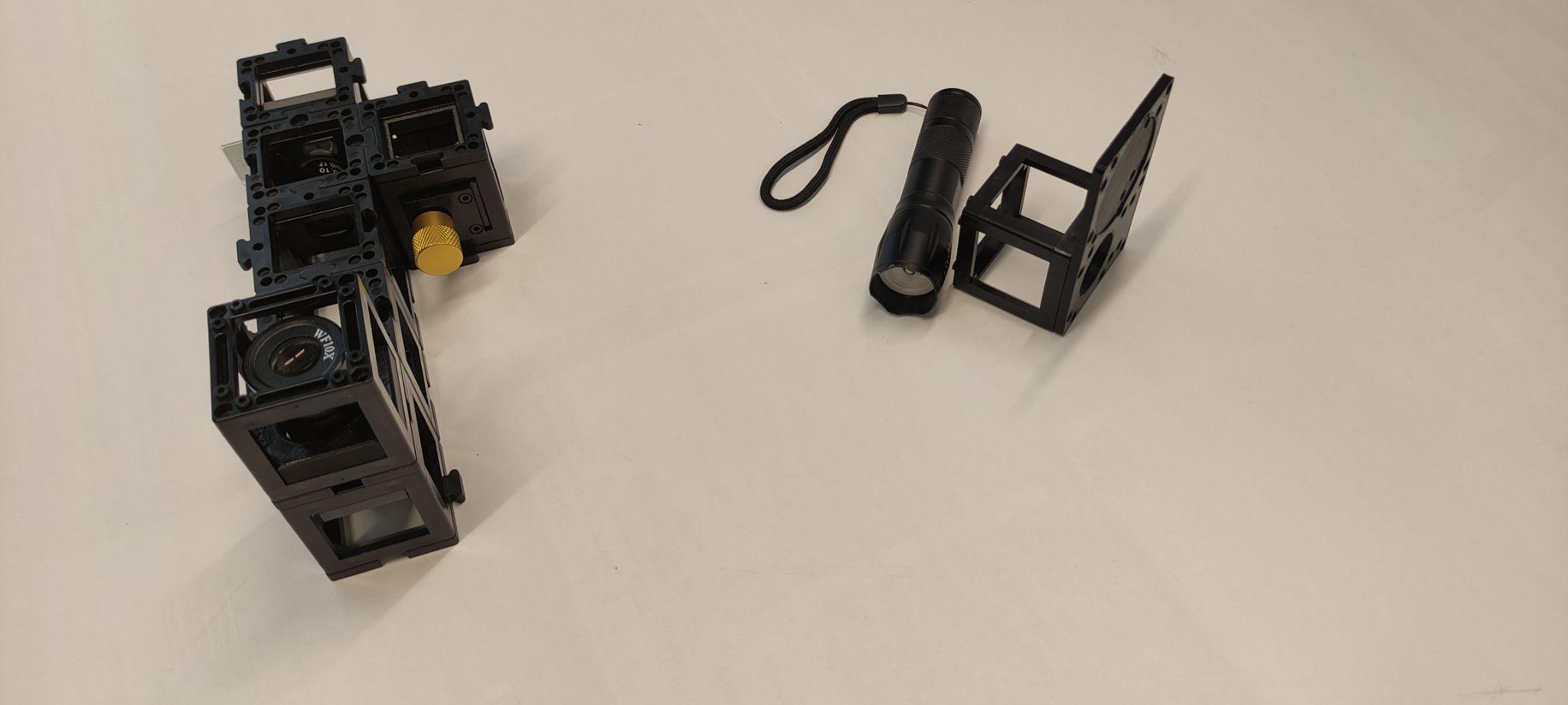
Put the eyepiece on top of the mirror cube — mind its orientation (wide lens down).
-
Illuminate the sample with the torch from some distance, look into the eyepiece, and focus by turning the Z-stage gear. For coarse adjustment, slide the objective in its holder or move the sample slide.
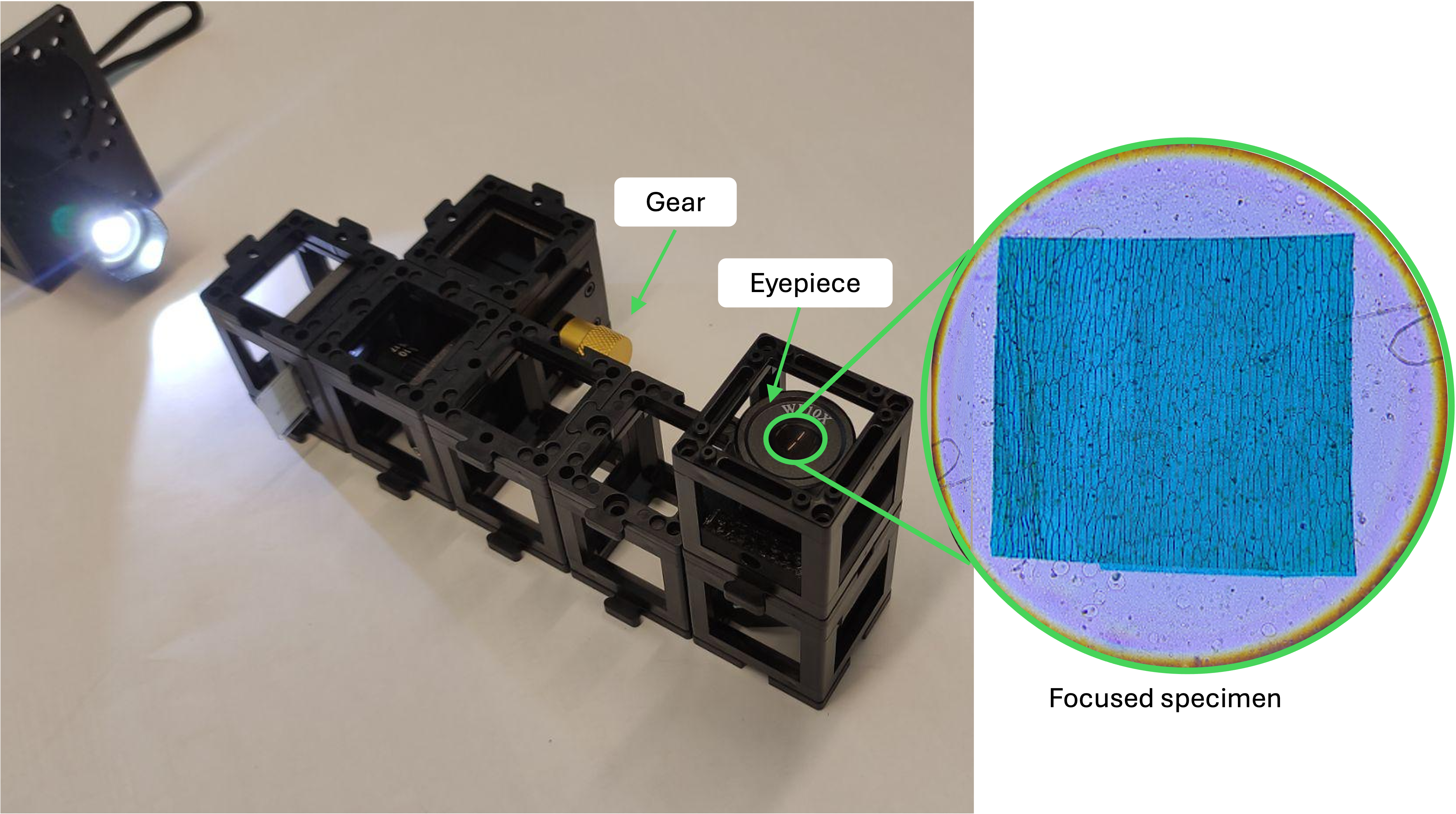 Focused result through the eyepiece.
What you should notice
- Higher magnification, smaller field of view than the infinity build — 4× objective instead of 2×.
- Distance is not optional here: unlike the infinity design, the tube length is fixed at 160 mm. Shorten or stretch it and the image degrades — that's the fundamental difference between the two architectures, explained in How a microscope works.
- The numbers on the objective barrel (
4x / 0.1,160/0.17) all mean something: see Parts and parameters.
Related
- Your first microscope — same optics, smartphone camera
- Calibrate the magnification